What Is a Puree Pouch Filling Machine?
Puree products look simple on a supermarket shelf, yet their packaging demands careful engineering. A Puree Pouch Filling Machine portions fruit, vegetable, baby food, or sauce puree into flexible pouches. It can also seal, code, and sometimes clean the pouch opening. The process must protect texture, weight accuracy, and product hygiene. A small filling error can leave residue around the seal. That residue may cause leakage, waste, or customer complaints.
Industry data explains why this equipment matters. Smithers’ The Future of Flexible Packaging to 2028 identifies flexible packaging as a continuing growth area, supported by lightweight formats and convenient consumption. Grand View Research also reports strong expansion in the global pouch packaging market, driven by ready-to-use food products and material efficiency. PMMI’s packaging machinery studies repeatedly highlight automation, labor availability, sanitation, and changeover speed as major investment concerns. These findings match what manufacturers see beside the production line: operators need faster adjustments, cleaner handling, and stable output.
However, no machine fits every puree. A thick mango blend behaves differently from a thin apple puree. Seeds, fibers, air bubbles, and temperature can change filling performance. That detail is often underestimated. A reliable machine should match the puree’s viscosity, pouch material, filling volume, sealing method, and cleaning requirements. This guide explains the machine’s structure, working process, benefits, limitations, and selection criteria. It also considers an uncomfortable point: higher automation does not automatically mean better production. Poor product testing, weak sanitation procedures, or unsuitable pouch dimensions can still undermine the investment.
What Is a Puree Pouch Filling Machine and What Products Does It Handle?
What Is a Puree Pouch Filling Machine?
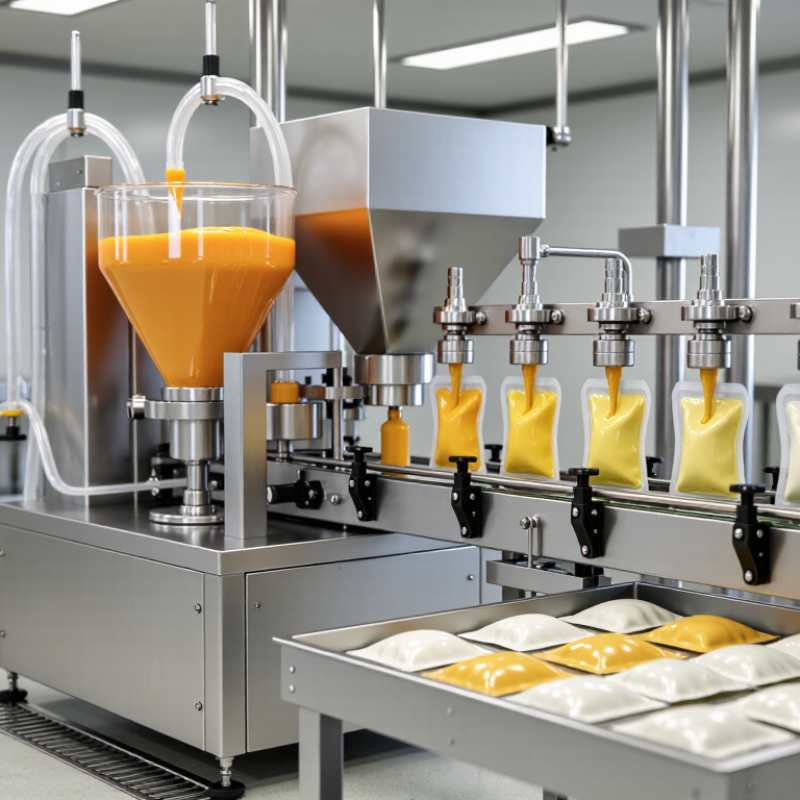
A puree pouch filling machine doses smooth or semi-thick products into flexible pouches. It usually combines pouch opening, filling, sealing, and date coding in one controlled process. Operators load prepared puree into a sanitary hopper. A piston or servo pump then measures each portion accurately. Heat sealing closes the pouch and helps protect the contents from outside contamination.
This equipment handles fruit puree, vegetable puree, baby food, soups, sauces, and some dairy-based products. It can process products with different viscosities, from pourable apple puree to thicker pumpkin blends. Small soft particles may be acceptable, but large pieces can block filling valves. Recipe temperature also matters. Warm products may flow better, while excessive heat can damage texture or packaging.
In daily production, workers check seal strength, fill weight, and pouch alignment. They also inspect the hopper and product path during cleaning. Clean-in-place systems can reduce manual work, but they still need verification. No machine handles every recipe perfectly. A high-fiber puree may require a wider valve or slower filling speed. This is where practical testing becomes important. A short trial often reveals problems that specifications miss. Viscosity can change after storage, too. That detail is easy to overlook. Reliable operation depends on product testing, hygienic design, accurate calibration, and regular maintenance.
How 10–2,000 g Pouches Are Dosed, Filled, and Sealed
A puree pouch filling machine measures, dispenses, and seals soft products in flexible pouches. It can handle portions from 10 to 2,000 g, but one setup rarely covers every size perfectly. Small 10 g sachets require precise dosing control, while 2,000 g pouches need stronger film handling and longer filling cycles. Servo-driven pistons, hygienic pumps, or weigh-based systems may be selected according to viscosity, particles, and target accuracy.
During operation, the machine opens or forms a pouch, positions it under the filling nozzle, and doses the puree. A cut-off valve helps reduce dripping. The pouch then moves to heat-sealing jaws, where pressure, temperature, and dwell time create the closure. Operators should check seal strength, fill weight, nozzle cleanliness, and pouch alignment during production. A tiny amount of puree on the seal can cause a serious leak.
Tips: Test the thickest and thinnest product batches. Record actual weights, not only machine settings. Use short trial runs before full production, because the first setting is rarely perfect. Change parts may be necessary when moving between 10 g and 2,000 g formats. Product temperature also matters; warmer puree may flow easily but can alter sealing behavior. Regular cleaning and documented checks improve reliability, although real factories still experience occasional variation.
Puree Pouch Fill Sizes: Weight and Equivalent Volume
Puree pouch filling machines use a metered dosing system to deliver a target quantity before the pouch is heat-sealed. This chart compares common nominal fill weights from 10 g to 2,000 g with their equivalent product volume, assuming a puree density of 1.0 g/mL. Actual volume varies with product density, temperature, and formulation.
The Four Main Stages: Feeding, Filling, Sealing, and Coding
What Is a Puree Pouch Filling Machine?
The Four Main Stages: Feeding, Filling, Sealing, and Coding
A puree pouch filling machine handles soft products such as fruit puree, vegetable blends, and dessert mixtures. Its work follows four connected stages: feeding, filling, sealing, and coding. Each stage affects product quality.
During feeding, operators load puree into a clean hopper. A controlled pump moves the product toward the filling nozzle. Agitation may reduce settling, especially when the puree contains fine particles. The filling system then measures a set volume and dispenses it into each pouch. Accuracy depends on viscosity, temperature, and pump settings. Small changes matter.
The pouch must remain steady during filling. Otherwise, puree can reach the sealing area. That creates weak seals or product leakage. After filling, heated jaws press the pouch layers together for a specified time. Temperature, pressure, and dwell time require careful adjustment. Too much heat may damage the film. Too little heat may produce an unreliable seal.
The final stage is coding. A clear code can show production information, such as a batch reference or date. It should remain readable after handling and storage. Operators should inspect seals, pouch alignment, fill weight, and code clarity during production. No machine is perfect. Product splashes, sensor errors, or uneven puree texture can still interrupt the process. Regular cleaning and recorded checks make these problems easier to trace.
Key Specifications: 20–120 Pouches per Minute with ±1% Accuracy
What Is a Puree Pouch Filling Machine?
A puree pouch filling machine doses products such as fruit puree, vegetable blends, and thick sauces into flexible pouches. Its key performance range is 20–120 pouches per minute, depending on pouch size, product viscosity, and filling volume. A slower setting may suit delicate puree with visible pulp. Higher speeds require stable feeding and accurate sealing.
The stated accuracy of ±1% means each pouch should remain close to its target weight. However, this figure is not automatic. Product temperature, air bubbles, pump wear, and uneven puree texture can affect results. In production experience, regular check-weighing helps detect drift before it creates significant waste. The machine should also support quick cleaning, adjustable filling time, and controlled product contact surfaces. Small details matter.
Tips: Test the puree at its actual production temperature. Record pouch weights during startup and after speed changes. Clean the filling nozzle thoroughly, especially after processing fibrous ingredients. A 120-pouch-per-minute rate may look impressive, but it can reduce accuracy if the product flow is unstable. That assumption needs testing. Calibration should be reviewed regularly, not only when errors become visible.
Hygiene and Food-Grade Standards for Puree Pouch Packaging
A puree pouch filling machine portions products such as fruit puree, baby food, sauces, and vegetable blends into flexible pouches. It usually combines pouch opening, filling, sealing, and date coding in one controlled process. The machine must handle thick, uneven textures without splashing or trapping air. A clean fill matters.
Hygiene starts with the product-contact path. Stainless steel surfaces should resist corrosion and allow quick inspection. Smooth welds, removable filling nozzles, and food-grade seals reduce hidden residue. Many systems use clean-in-place routines, but operators still need to check corners, valves, and gasket edges manually. Warm puree can leave a sticky film. That film may support microbial growth if cleaning is rushed. Sealed pouches also require stable temperature, pressure, and sealing time. A weak seal can leak during transport. A strong-looking seal is not always a reliable seal. In practice, no cleaning plan is perfect, so documented inspections and routine sanitation verification remain important. Material and process requirements can vary by product and market.
Tips: Keep filled pouches away from dusty surfaces. Inspect one pouch from each production run. Check seal edges for wrinkles, channels, or moisture. Replace damaged gaskets promptly. Record cleaning times, temperatures, and operator checks. Do not rely only on visual cleanliness. I would also review the cleaning method when puree formulas change, because extra fiber or sugar can alter residue patterns. Small details matter.