What Are the Top 10 Door Cabinet Hinges for Buyers?
Choosing the right Door Cabinet Hinges can determine whether a cabinet feels refined or frustrating. A door may look beautiful, yet a weak hinge can create sagging, scraping, or uneven gaps within months. Buyers should examine more than price. They need to consider door weight, opening angle, overlay size, adjustment range, corrosion resistance, and installation method.
Cabinet hardware educator and master carpenter Scott McBride once said, “Hardware is where cabinet design meets daily use.” That observation remains practical. A hinge is small, but it carries repeated movement every day. Soft-close models can reduce noise in a busy kitchen. Concealed hinges offer a clean exterior. Heavy-duty options may suit thick hardwood doors, while compact hinges fit lighter storage units. The best choice depends on the cabinet, not the advertisement.
This guide reviews the top 10 Door Cabinet Hinges for buyers who want dependable performance and sensible value. Each option deserves careful comparison. Some hinges install quickly but provide limited adjustment. Others feel excellent but cost more than expected. That trade-off matters. Installation errors matter, too.
No ranking is perfect. A hinge that works beautifully in one home may disappoint in another. Door alignment, humidity, screw quality, and user habits can change the result. Buyers should measure twice, test the closing action, and avoid assuming that “universal” means truly universal. Small details often decide long-term satisfaction.
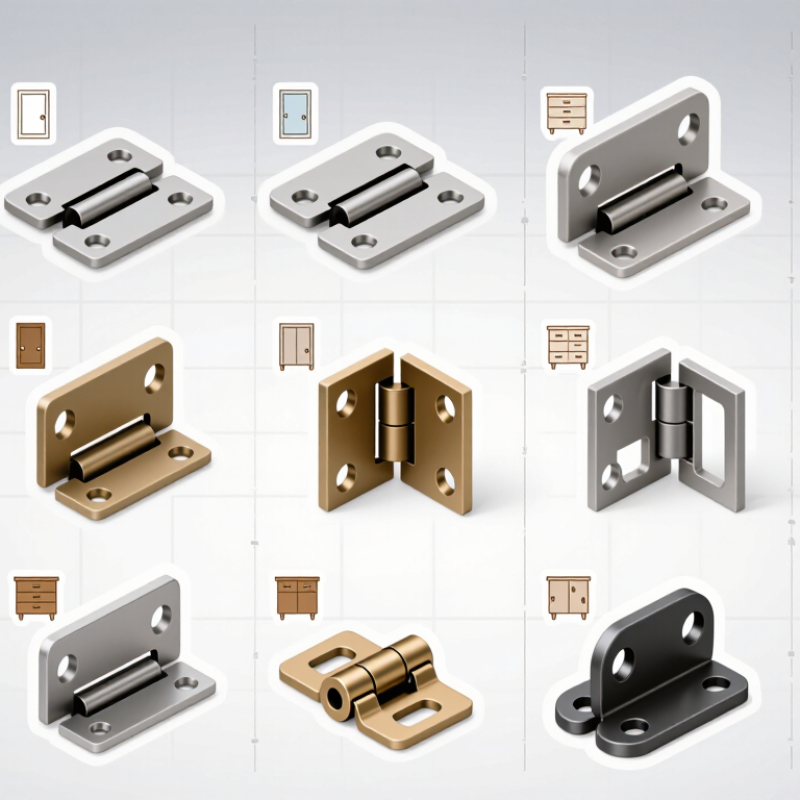
What Door Cabinet Hinges Are and How They Function
Cabinet door hinges are small mechanical joints that connect a door to its cabinet box. They carry the door’s weight, control its opening angle, and keep gaps visually consistent. The ten common choices include concealed, semi-concealed, butt, pivot, overlay, inset, face-frame, frameless, soft-close, and three-dimensional adjustable hinges.
Their function is more specific than it appears. A concealed hinge usually uses a cup fixed inside the door and an arm attached to the cabinet plate. Adjustment screws move the door sideways, vertically, and inward. Soft-close models add a damper, reducing slamming and protecting the cabinet edge.
Many doors open between 95 and 110 degrees, but nearby walls may require a smaller angle. Measure carefully.
The ANSI/BHMA A156.9 cabinet hardware standard evaluates hinge strength, durability, and operating performance through repeated-cycle testing. Test levels can involve tens of thousands of openings, so cycle ratings matter more than attractive packaging. Grand View Research’s 2024 furniture hardware analysis also identifies renovation and modular cabinetry as major demand drivers. That does not make every hinge suitable. A heavy solid-wood door needs stronger load support than a lightweight panel. I have seen “universal” hinges create uneven gaps after installation. That label deserves skepticism. Door thickness, overlay distance, mounting style, and clearance should be checked before buying.
Which Factors Should Buyers Compare Before Choosing Hinges?
Choosing among the top 10 door cabinet hinges requires more than comparing prices. Buyers should match each hinge to the door’s weight, thickness, overlay, and opening angle. A concealed hinge may suit modern cabinetry, while a surface-mounted hinge can simplify repairs and installation.
Measure twice. Fit is everything.
Check the hinge’s load rating and cycle rating, not just its appearance. A heavy solid-wood door needs stronger cups, plates, and screws than a lightweight panel. In kitchens or bathrooms, corrosion-resistant steel is usually a safer choice because steam and cleaning moisture can weaken poor finishes. Buyers should also compare soft-close performance, adjustment range, and noise during closing. A hinge that closes gently in a showroom may behave differently after months of dust and misalignment.
Installation details deserve equal attention. Confirm the cup diameter, drilling depth, mounting pattern, and required tools before ordering. Adjustable hinges can correct small gaps, but adjustment cannot repair a badly positioned door. I once treated easy installation as a minor concern, then spent extra time correcting uneven reveals. That mistake changed how I evaluate hardware. Clear instructions, replaceable screws, and accessible adjustment points improve long-term reliability. For frequently used cabinets, buyers should request test data or inspect sample hardware under repeated opening cycles. Ratings are useful, but real door weight and daily use remain the better reference.
What Are the Top 10 Door Cabinet Hinges for Different Needs?
Choosing the right hinge depends on door construction, weight, opening angle, and daily use. Grand View Research valued the global kitchen cabinets market at about $94.39 billion in 2023, with continued growth expected through 2030. That expansion increases the need for reliable, application-specific hardware.
For quiet family kitchens, soft-close concealed hinges reduce slamming and protect cabinet edges. Full-overlay hinges suit modern doors covering the entire cabinet frame. Half-overlay hinges work well when two doors share one partition.
Inset hinges fit doors inside the frame, creating a precise, furniture-like appearance. Face-frame hinges mount directly to framed cabinets and simplify replacement work. Frameless concealed hinges provide clean lines inside European-style boxes.
For tall storage doors, heavy-duty hinges offer stronger support. Pivot hinges suit wide or unusually shaped doors. Piano hinges distribute force along the door’s full height.
Lift-off hinges help maintenance teams remove doors quickly. They are practical, but not always ideal for homes with children.
The 2024 Houzz U.S. Kitchen Trends Study reports that 76% of renovating homeowners upgrade their cabinets, showing how often hinge selection accompanies remodeling. Check the manufacturer’s load rating, cup diameter, overlay measurement, and adjustment range before ordering. A soft-close hinge may still fail when a thick door exceeds its rated weight. I would not choose appearance alone. Installation tolerance matters more than many buyers expect, and even experienced installers sometimes overlook screw quality and frame alignment.
How Should Buyers Install, Adjust, and Maintain Cabinet Hinges?
Choosing among the top ten door cabinet hinges matters less than fitting the hinge correctly. In my workshop, I mark each hinge position before drilling. The usual spacing is about 75 to 100 millimeters from the door edges. However, heavy doors may need an additional hinge. Measure twice. Use a sharp drill bit and a level surface. The hinge cup must sit flush, not tilted or forced into the wood.
After mounting the door, adjust one screw at a time. The side screw changes the gap between neighboring doors. The depth screw moves the door inward or outward. The height adjustment usually works through the mounting plate. Turn each screw slowly, then close the door to check its position. A small gap can prevent rubbing. Do not overtighten the screws, because damaged particleboard may lose its grip. I have made this mistake when rushing a kitchen repair.
Cabinet hinges need simple, regular care. Wipe dust and cooking grease with a slightly damp cloth, then dry the metal completely. Check loose screws every few months, especially on frequently used doors. A tiny amount of suitable lubricant may reduce noise, but excess oil attracts dust. Watch for rust, bent arms, cracked plates, or repeated sagging. These signs often mean adjustment is no longer enough. Replace damaged hardware with a hinge matching the door weight, overlay, hole pattern, and opening angle. Test the door gently afterward.
What Are the Top 10 Door Cabinet Hinges for Buyers?
Typical maximum opening angles help buyers compare common cabinet-door hinge configurations. Actual performance depends on door thickness, frame clearance, mounting position, and the hinge specification.
How to install: Check the door overlay, cup position, screw locations, and required clearance before drilling. For a common concealed cup hinge, the cup is often installed in a 35 mm diameter recess, but the hinge instructions should always determine the exact setback and depth. Secure the mounting plate to the cabinet, attach the hinge to the door, and support the door while tightening all screws.
How to adjust: Use the hinge adjustment screws to correct side-to-side alignment, door height, and door depth. Adjust gradually, alternating between hinges so the door remains level and the gaps stay even.
How to maintain: Inspect screws and mounting plates periodically, tighten loose hardware, remove dust and residue with a soft cloth, and use only a small amount of suitable lubricant where the hinge design permits it. Replace bent, cracked, corroded, or unreliable hinges.
Opening-angle figures are typical nominal values for comparison and are not a substitute for the installation specification of a particular hinge.