China remains the world’s largest steelmaking base, making Chinese suppliers important partners for international buyers. World Steel Association data shows China produced approximately 1.005 billion tonnes of crude steel in 2024. That scale supports broad production capacity, competitive pricing, and export experience.
However, volume alone does not guarantee dependable carbon steel sheets. The IEA reports that steelmaking creates roughly 7% to 9% of global energy-related emissions. IEA Executive Director Fatih Birol has stated, “The steel sector is currently the largest industrial consumer of coal.” This reality makes responsible sourcing increasingly important. Buyers should examine mill certificates, chemical composition, thickness tolerance, surface condition, packaging, and shipment records.
This guide introduces China’s top 10 suppliers for global buyers seeking a reliable Carbon Steel Sheet Supplier. The selection considers manufacturing capability, quality systems, product range, export performance, and communication practices. Details matter. A 2-millimeter sheet can arrive with unexpected tolerance differences, rough edges, or moisture stains after a long sea voyage.
A top-ten list is useful, but never absolute. Supplier websites can look polished; factory evidence matters more. Buyers should request recent inspection reports, sample sheets, and clear Incoterm quotations before placing large orders. World Steel Association production statistics and the IEA’s Iron and Steel Technology Roadmap provide useful industry context, but they cannot replace direct supplier verification. This guide aims to narrow the search while encouraging practical, evidence-based decisions.
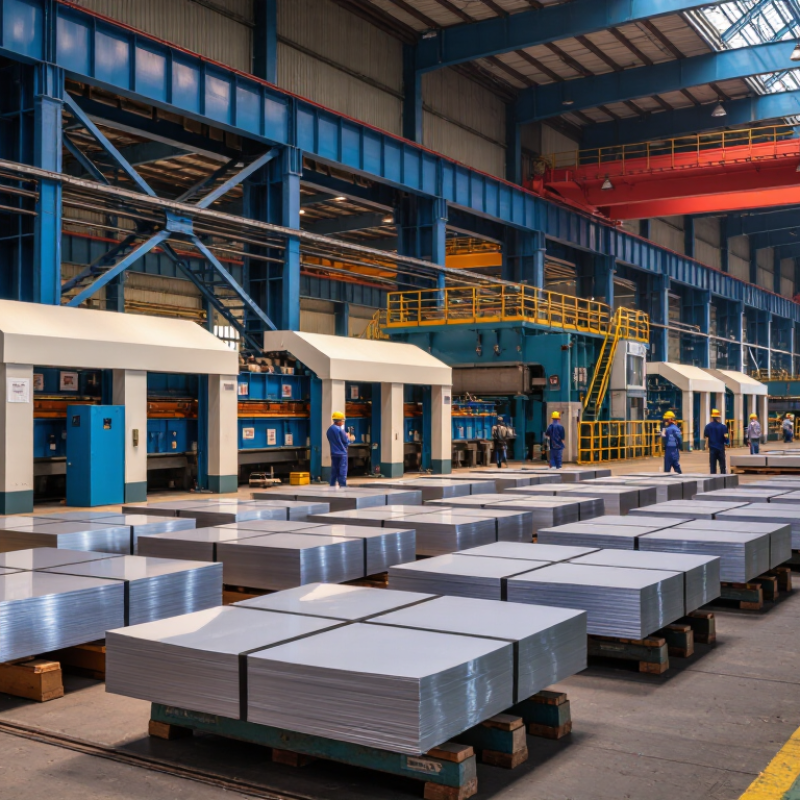
Carbon steel sheet is a flat-rolled steel product made mainly from iron and carbon. Its carbon content affects strength, hardness, weldability, and forming performance. Low-carbon sheet bends easily and suits cabinets, ductwork, and vehicle parts. Higher-carbon grades provide more strength but may require careful cutting and welding. The surface may be hot-rolled, cold-rolled, pickled, or coated.
Supplier choice matters because a sheet can look correct while failing during production. Experienced buyers check the exact grade, thickness tolerance, width, flatness, and surface condition. A reliable supplier should provide mill test certificates, heat numbers, inspection records, and clear packing details. These documents help confirm chemical composition and mechanical properties. Ask which testing standard applies to your destination market.
Small details often reveal quality. Measure a random sheet with a calibrated micrometer, not only the label. Inspect edges for cracks and check bundles for trapped moisture. Rust stains under protective wrapping are a warning. Delivery discipline matters too, especially when a production line needs matching heats or fixed dimensions. A low quotation may appear efficient, but rework, rejected parts, and delayed vessels can cost much more. I have seen purchasing teams focus too heavily on price and overlook tolerance control. That mistake is easy to repeat. Supplier performance should be reviewed after delivery, not only during negotiation.

China Top 10 Carbon Steel Sheet Suppliers for Global Buyers
Key Criteria for Evaluating Chinese Carbon Steel Sheet Suppliers
Selecting a carbon steel sheet supplier requires more than comparing quoted prices. Experienced buyers check grade, thickness tolerance, surface condition, and available dimensions. Request recent mill test certificates with heat numbers and chemical results. Confirm that the documents match the actual shipment. Ask for production photos, inspection records, and samples when specifications are critical. Small details matter.
A dependable supplier should explain its quality control process clearly. Verify testing for yield strength, tensile strength, elongation, and dimensional accuracy. Independent pre-shipment inspection can reduce uncertainty, especially for large orders. Review packaging methods too. Waterproof paper, steel straps, and reinforced corners help sheets arrive without moisture damage or bent edges. Confirm production capacity, lead times, and loading experience before signing a contract.
Communication is another useful measure. Suppliers should answer technical questions directly and report problems quickly. Compare standards such as ASTM, EN, or JIS only after confirming equivalent grades. The lowest offer may hide weaker tolerances or incomplete documentation. A spreadsheet cannot reveal every risk. I once underestimated the value of clear packaging instructions, and the delivery required extra sorting. Allow room for practical mistakes. Evaluate payment terms, replacement procedures, and traceability before choosing among the top ten suppliers.
A reliable supplier should provide carbon steel sheets that meet the specified international grade and mechanical-property requirements. This chart compares minimum yield strength and minimum tensile strength for commonly specified grades under ASTM and EN standards. Buyers should also verify thickness tolerance, mill test certificates, heat numbers, inspection records, production capacity, and export compliance. Values are minimum reference requirements and may vary by product thickness and applicable standard edition.
China’s Top 10 Carbon Steel Sheet Suppliers for Global Buyers should be assessed by evidence, not advertising. The World Steel Association reported that China produced about 1.005 billion tonnes of crude steel in 2024. That represented roughly 53% of global output. This scale supports broad sheet availability, flexible production schedules, and competitive export pricing.
A credible top-ten shortlist should include suppliers offering Q235B, Q355B, ASTM A36, and S235JR sheets. Buyers should verify thickness tolerance, surface quality, chemical composition, and impact performance. Mill test certificates must match the actual heat number. ISO 9001 certification helps, but it cannot replace independent inspection. Packing also matters. Export-ready bundles need dry wrapping, edge protection, steel straps, and clear marking.
Check the details.
The International Energy Agency estimates that iron and steel production creates about 7% of global energy-related emissions. Therefore, buyers should request production-route information and measurable emissions data when sustainability affects procurement. The OECD also highlights excess steel capacity as a continuing market concern, which makes unusually low quotations worth examining carefully. In practical sourcing, delivery reliability often matters more than a small price difference. A delayed shipment can stop fabrication for days. Still, certificates may contain errors, and inspection plans can be incomplete. Buyers should leave room for verification, corrective action, and a second supplier.
When comparing China’s top carbon steel sheet suppliers, begin with the product, not the advertised price. Check grade, thickness tolerance, width accuracy, surface condition, and cutting options. Ask for a recent mill test certificate with the heat number. Samples should match the stated chemical composition and mechanical performance. Standards such as ASTM, EN, or GB must fit your project requirements.
Certification needs careful review. ISO 9001 can support process control, but it does not guarantee every shipment is perfect. Request EN 10204 3.1 documents when traceability matters. Compare quotes using the same thickness, quantity, packing method, and Incoterm. A low price may exclude edge protection, inland transport, testing, or export documentation. That mistake is common.
Tips:
Create one comparison sheet. Record grade, tolerance, certification, minimum order, lead time, payment terms, and total landed cost. Ask how sheets are protected inside the container. Moisture-resistant paper, steel straps, and fumigation compliance can prevent expensive damage. Export experience also matters. Review loading photos, packing lists, customs documents, and responses to technical questions. A reliable supplier explains delays honestly and provides a practical corrective plan. I would not judge service from one fast reply alone; consistent records are stronger evidence.
Choosing among China’s leading carbon steel sheet suppliers starts with a usable specification, not a polished website. Define grade, thickness, width, surface finish, tolerance, coil or cut-sheet format, and monthly volume. Ask each shortlisted supplier for current mill certificates, production photos, test reports, and export references. A sample sheet can reveal edge quality, flatness, oiling, and packaging discipline. Do not trust certificates alone. Compare them with independent test results when the order is valuable. Small differences matter.
Audit the factory directly or use a qualified third-party inspector. Check melting capacity, rolling equipment, calibration records, warehouse labeling, and nonconforming-material controls. Request a video call from the production floor, then verify the address and responsible contact. Evaluate communication, not only price. A supplier that answers technical questions clearly is easier to manage after a delay. I would score quality, lead time, documentation, payment terms, and after-sales response separately. My scoring sheet is never perfect, but it exposes weak assumptions.
Before importing, confirm the HS classification, destination requirements, duties, and required documents with a licensed customs professional. Agree on Incoterms, inspection points, delivery dates, packing materials, and remedies for nonconforming sheets. Specify moisture barriers, steel strapping, corner protection, and container loading photos. Use a written purchase contract with approved tolerances and a pre-shipment inspection. Start with a controlled trial shipment before scaling volume. Check the bill of lading, commercial invoice, packing list, certificate of origin, and test certificates before release. Delays often begin with one missing line.
Content © 2025 Komatsu. All Rights Reserved