
Choosing the right Run Capacitor is a small decision with visible consequences. A wrong value can cause humming, overheating, weak starting, or early motor failure. The International Energy Agency reports that electric motors consume about 45% of global electricity. Even modest efficiency losses deserve attention.
The U.S. Department of Energy also identifies motor systems as major industrial energy users. This makes capacitor selection more than a replacement task. It becomes a maintenance and energy-management decision. IEC 60252-1 provides important requirements for AC motor capacitors, including electrical performance and safety considerations. Market research from Grand View Research indicates continued growth in the global capacitor industry, driven by appliances, HVAC equipment, and industrial automation.
Motor-drive specialist Dr. Paul C. Krause offers a useful principle: “Motor performance depends on matching the electrical conditions to the machine.” That principle applies directly to Run Capacitor selection. Voltage rating, capacitance, frequency, temperature, enclosure, and duty cycle must agree with the motor’s nameplate and operating environment. A dusty condenser unit in a hot rooftop cabinet needs different attention than a clean indoor fan motor.
The label may look simple. It is not.
This guide, “10 Tips for Buying the Right Run Capacitor,” focuses on practical checks before purchase. It explains how to read microfarads, avoid undersized voltage ratings, verify terminal layouts, and recognize counterfeit or poorly specified products. Some recommendations are intentionally cautious. Real equipment varies, and a neat rule can fail in the field. When measurements conflict with assumptions, trust documented measurements and qualified technical advice.
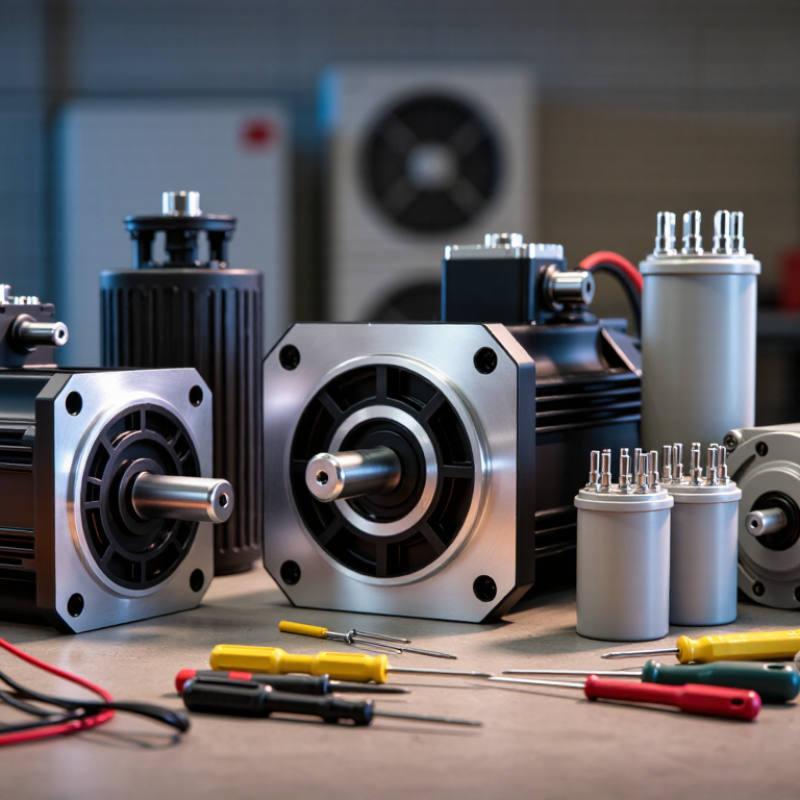
10 Tips for Buying the Right Run Capacitor
Identify the Run Capacitor’s Required Specifications
When buying a run capacitor, begin with the motor nameplate and service manual. These sources usually provide the required capacitance, voltage, frequency, and application details. Capacitance appears in microfarads, shown as μF or MFD. Match this value closely. Even a small difference can increase motor heat, reduce efficiency, or cause unstable operation. Never guess.
The voltage rating must meet or exceed the original capacitor’s rating. Never install a lower-rated unit. Check whether the motor uses a single or dual capacitor, and confirm the terminals match the wiring layout. A run capacitor is designed for continuous operation, unlike many start capacitors. Mixing these types can damage the motor. Physical details also matter. Measure the diameter, height, mounting strap, terminal spacing, and available clearance inside the equipment.
Read the temperature rating and capacitance tolerance before purchase. Outdoor condensers may face hot metal surfaces and harsh seasonal changes. Select a component rated for that environment. Before touching the capacitor, power must be isolated and stored charge safely discharged by a qualified technician. Inspect the old unit for bulging, leaking oil, burned terminals, or loose connections. Take clear photos of the wiring. I have seen correct electrical ratings fail because the terminal arrangement was copied incorrectly. My own early checks were too focused on μF values. The enclosure and connection details deserved equal attention.

Choosing a run capacitor begins with the motor’s nameplate and service documentation. Match the capacitance rating exactly, usually shown in microfarads, or µF. A small mismatch can reduce efficiency, increase heat, and change motor performance. Never guess from the capacitor’s size or shape.
The voltage rating must meet or exceed the motor’s specified requirement. A higher rating is generally acceptable when the capacitance and physical specifications remain correct. A lower rating is unsafe because the capacitor may fail under normal operating conditions. Check the frequency rating too. A capacitor designed for 50 Hz should not automatically replace one specified for 60 Hz. Some motors tolerate both frequencies, but the documentation must confirm it.
I once focused on voltage and overlooked frequency. That was a careless inspection. Before purchasing, compare every marking with the original component, including capacitance tolerance, temperature range, terminals, and case dimensions. Disconnect power completely, then verify the circuit with a suitable meter before handling the capacitor. A capacitor can retain charge after shutdown. If the printed label is damaged, stop and consult a qualified technician rather than estimating the rating. Small details matter.
Tip 1: Match the capacitance rating in microfarads, or µF, exactly.
Tip 2: Choose an equal or higher voltage rating, never a lower one.
Tip 3: Check terminal style, spacing, and wire fit before ordering.
Tip 4: Confirm the capacitor suits continuous-duty motor operation.
The wrong part may cause humming, overheating, or weak starting torque.
The International Energy Agency reports that electric motor systems consume more than 40% of global electricity. Small efficiency losses matter.
Tip 5: Verify the motor’s 50 or 60 Hz frequency.
Tip 6: Compare the original tolerance, often marked as ±5% or ±10%.
Tip 7: Review the temperature range, especially near rooftops, furnaces, or outdoor compressors.
Tip 8: Consider humidity, dust, salt air, and vibration.
A sealed enclosure can reduce moisture damage, but it cannot fix poor ventilation.
Tip 9: Check altitude requirements when equipment operates above normal installation levels.
Cooling performance may change.
Tip 10: Inspect the old capacitor for bulging, oil leakage, cracked insulation, or burned terminals.
Do not rely on appearance alone.
The U.S. Department of Energy links efficient motor systems with major industrial energy savings, yet capacitor selection is often treated as a minor detail. That assumption deserves reconsideration.
In field work, I record the µF value, voltage, terminal layout, ambient temperature, and motor model before purchasing. I also photograph the wiring. Measurements can still be imperfect. A weak connection may imitate capacitor failure. When uncertain, compare operating current with the motor’s rated data and use qualified electrical testing procedures.
A run capacitor should be judged by more than its price or printed microfarad rating. Compare the stated capacitance, voltage, frequency, tolerance, operating temperature, and duty cycle with the motor’s requirements. A small mismatch can cause humming, slow starts, excess heat, or repeated trips. Look for a durable polypropylene film design, secure terminals, clear markings, and a case without dents, swelling, or oil leakage. Physical details matter.
Safety certification deserves careful checking. A familiar symbol alone proves little if the certificate number cannot be verified. Check whether the certification applies to the capacitor’s exact series, voltage range, and production location. Requirements differ by market and equipment type. Certification is not a substitute for correct installation.
Manufacturer reliability is equally important. Review the technical datasheet, traceability information, batch or date codes, warranty terms, and documented quality testing. Reliable manufacturers explain expected service life and publish tolerances instead of hiding behind vague claims. Ask whether replacement units remain consistent across batches. That question is often missed.
In practical inspections, technicians may focus on a low purchase cost and overlook heat exposure near the motor. I have found that comparison tables are useful, but they can create false confidence when data is incomplete. Recheck the details against the motor label, installation environment, and local electrical requirements before choosing.
A correct run capacitor begins with the equipment manual, not a visual match. Confirm capacitance, voltage rating, frequency, terminal layout, case size, and operating temperature. IEC 60252-1 defines performance and tolerance requirements for motor-run capacitors, while NEMA MG 1-2024 stresses matching motor operating conditions. Never replace a 370-volt part with a lower-rated capacitor. Measure twice. Do not guess.
Installation details affect service life. Disconnect power, verify zero voltage with a meter, and discharge the capacitor using an approved method. Inspect loose terminals, overheated connectors, oil stains, bulging, and restricted airflow. The U.S. Department of Energy’s Building America guidance reports that duct leakage can waste 20% or more of conditioned air, increasing equipment workload. That extra cycling can expose a weak capacitor sooner. I have occasionally trusted a matching label too quickly; terminal quality and heat matter just as much.
Schedule checks before the cooling season and after severe heat exposure. Record capacitance and voltage readings, then compare them with the manufacturer’s tolerance. The U.S. Energy Information Administration’s 2020 Residential Energy Consumption Survey found that space heating and air conditioning represent about half of household energy use. Small electrical faults deserve attention. Keep the enclosure dry, tighten connections carefully, and replace damaged contactors. A perfect reading today does not guarantee stable performance next summer.
Content © 2025 Komatsu. All Rights Reserved