three part picture of forklifts

Top Big Roots Blower Manufacturers for Global Buyers

Choosing a Big Roots Blower manufacturer is not a simple matter of comparing catalogue prices. Global buyers must examine engineering depth, production consistency, service reach, and verified field performance. A blower may look impressive on paper, yet fail under dust, heat, moisture, or continuous industrial loading.

The Roots brothers established the roots-blower principle in the nineteenth century. In their 1860 patent, Philander Roots described the purpose as “a machine for forcing air.” That short statement still reflects the core duty of every modern Big Roots Blower: moving air or gas steadily, safely, and efficiently. However, modern buyers need more than historical reliability. They should review pressure ranges, airflow accuracy, shaft sealing, noise levels, motor compatibility, and maintenance access. Those details become visible beside a wastewater basin, a pneumatic conveying line, or a refinery compressor room.

This guide introduces leading manufacturers serving international markets. It considers product design, manufacturing capability, customization, certifications, replacement support, and delivery experience. It also separates measurable strengths from promotional claims. That distinction matters.

No manufacturer is perfect.

Some suppliers excel in heavy-duty systems but offer slower technical support. Others provide attractive pricing, yet limited local service. Buyers should therefore compare operating conditions, not brand names alone. Test reports, reference projects, warranty terms, and spare-parts availability deserve careful attention. A rushed choice may save money today and create costly downtime later. The following overview aims to make that evaluation clearer, while acknowledging one practical weakness: published manufacturer information is not always equally detailed or independently verified.
Top Big Roots Blower Manufacturers for Global Buyers

What a Big Roots Blower Is and How It Works

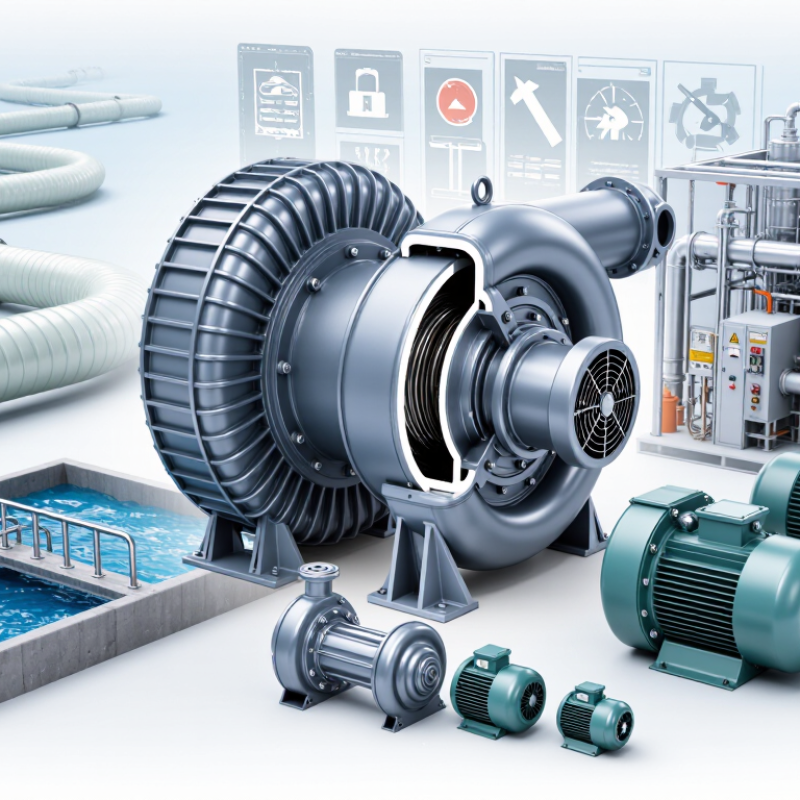
A big Roots blower is a positive-displacement air mover designed for high-volume, low-to-moderate pressure service. Its casing contains two precisely shaped lobes that rotate in opposite directions. Timing gears keep the lobes separated, often by only a small clearance.

Air enters through the inlet port and fills the spaces between each lobe and the housing. As the rotors turn, these trapped air pockets travel around the casing toward the outlet. The blower does not compress air internally like a screw compressor. Instead, pressure rises when downstream resistance pushes against the delivered airflow. This detail is often misunderstood.

In wastewater aeration, pneumatic conveying, and industrial ventilation, operators value steady flow and simple mechanical design. During field inspections, unusual noise often points to worn bearings, poor alignment, or incorrect lubrication. Hot discharge air can also indicate excessive pressure or restricted piping. Small clearances matter.

Global buyers should examine rotor balance, casing accuracy, seal design, motor compatibility, and documented testing. A reliable manufacturer should provide performance curves, vibration limits, maintenance instructions, and traceable quality records. Cheap equipment may appear attractive, but unstable airflow can increase energy use and production delays. I have seen selection decisions focus too heavily on maximum pressure. That can be a mistake. Actual duty conditions, gas temperature, altitude, and pipe resistance deserve equal attention.

Top Big Roots Blower Manufacturers for Global Buyers

What a Big Roots Blower Is and How It Works

A big Roots blower is a positive-displacement machine that moves a nearly fixed volume of air with each rotor revolution. The representative values below are calculated for a blower with a 0.10 m³/rev displacement and 85% volumetric efficiency. Increasing rotor speed increases airflow almost linearly, while the actual pressure rise depends on system resistance, temperature, leakage, and operating clearances.

Key Performance Factors for Comparing Global Manufacturers

Comparing global roots blower manufacturers requires more than checking maximum airflow. Buyers should examine pressure stability, specific power, noise, vibration, and service life under real operating conditions. A blower rated at 1,000 m³/h may perform poorly when backpressure rises. Ask for performance curves, not marketing figures.

The U.S. Department of Energy reports that compressed-air leaks can waste 20–30% of compressor output. This figure highlights an important comparison point: package efficiency matters as much as machine efficiency. Review inlet filtration, cooling design, seal leakage, and control response. Request test results measured under recognized procedures, such as ISO 1217 where applicable. Also compare data at your actual pressure and duty cycle.

Maintenance evidence reveals practical experience. Check bearing replacement intervals, oil-change requirements, spare-part availability, and remote diagnostic functions. A lower purchase price can lose its appeal after repeated shutdowns. It happens. Ask manufacturers for field references in wastewater, pneumatic conveying, or industrial aeration. Their answers should include operating hours and measured energy use. Still, no report replaces an acceptance test at your site. Ambient dust, altitude, humidity, and pipe losses can change results. Any supplier avoiding these details deserves careful review.

Leading Big Roots Blower Manufacturers by Market Strength

Big Roots Blower Manufacturers for Global Buyers are often judged by market strength, not advertising volume. Strong manufacturers usually have broad installed bases, stable production capacity, and service teams across major industrial regions. Their equipment supports wastewater treatment, pneumatic conveying, chemical processing, and other continuous-duty applications.

In field evaluations, reliability appears in small details. Precise machining, balanced rotors, durable coatings, and tested sealing systems reduce vibration and unplanned downtime. Established manufacturers also provide performance curves, noise data, energy estimates, and practical maintenance schedules. A wide product range matters too, because airflow, pressure, altitude, and operating temperature vary between projects. Market strength is not permanent. A supplier may lead in one region but offer weaker support elsewhere. That point is easy to miss.

Tips: Compare verified operating data, not only catalog claims. Ask for service response times, spare-parts availability, and references from similar industries. Check whether local technicians understand installation and commissioning requirements. A lower purchase price can become expensive when energy use rises every day. However, premium specifications are not always necessary. Match the blower to the actual duty cycle. Leave room for future capacity, but avoid paying for unused performance. Personally, I would also review warranty exclusions carefully. They often reveal more than promotional language.

Top Big Roots Blower Manufacturers for Global Buyers - Leading Big Roots Blower Manufacturers by Market Strength

Manufacturer Segment Primary Market Strength Typical Airflow Range Typical Pressure Range Common Applications Key Buyer Criteria Global Buyer Fit
Large established industrial producers Broad international distribution, mature engineering resources, and extensive service coverage Approximately 100–15,000 m³/h, depending on model and operating speed Typically 0.2–1.0 bar(g) for pressure service; deeper vacuum requires dedicated configurations Wastewater aeration, pneumatic conveying, combustion air, chemical processing Lifecycle support, documentation, spare-parts availability, efficiency, and compliance Very strong for multinational projects and long-term operation
Specialized high-capacity blower manufacturers Strong competence in large air volumes, continuous-duty systems, and engineered packages Approximately 2,000–30,000 m³/h for large packaged installations Commonly 0.3–1.2 bar(g), subject to rotor design, cooling, and speed limits Municipal wastewater, aquaculture, cement handling, bulk-material conveying Capacity stability, noise control, vibration limits, system integration, and energy use Very strong for high-flow industrial projects
Regional OEM and custom-engineering manufacturers Flexible customization, local technical support, and competitive project pricing Approximately 50–10,000 m³/h across standard and customized configurations Usually 0.2–0.8 bar(g); project-specific designs may extend beyond this range Industrial plants, food processing, aquaculture, ventilation, and material handling Customization speed, local installation support, delivery time, and total purchase cost Strong for regional projects and tailored requirements
Cost-focused volume manufacturers High production capacity, standardized product families, and attractive upfront pricing Approximately 30–8,000 m³/h, with availability varying by model series Generally 0.1–0.8 bar(g); confirm continuous-duty limits before selection General aeration, conveying, printing, packaging, and small-to-medium process lines Verified performance curves, quality control, warranty terms, and replacement-part access Strong where budget and standardization are priorities
Application-focused wastewater suppliers Deep expertise in aeration duty, operating-point selection, and treatment-plant integration Approximately 200–20,000 m³/h for single or multiple blower installations Commonly 0.3–0.9 bar(g), depending on basin depth and diffuser losses Activated-sludge treatment, aerobic digestion, sludge stabilization, and water reuse Specific energy consumption, turndown capability, redundancy, controls, and noise level Very strong for municipal and industrial wastewater systems
Oil-free process-air specialists Reliable oil-free air delivery and process suitability for contamination-sensitive operations Approximately 20–5,000 m³/h, subject to pressure, speed, and configuration Typically 0.2–0.7 bar(g) for Roots-type positive-displacement service Food and beverage, pharmaceutical production, electronics, and clean conveying Air purity, hygienic design, sealing arrangement, validation documents, and maintenance Very strong for contamination-sensitive processes
Vacuum and dual-service blower specialists Strong capability in suction duty, pressure-vacuum switching, and material-transfer systems Approximately 50–12,000 m³/h, depending on vacuum level and system resistance Typical vacuum service from about −0.2 to −0.8 bar(g); confirm allowable differential pressure Central vacuum, pneumatic conveying, packaging, grain handling, and lifting systems Vacuum stability, filtration, inlet protection, cooling, duty cycle, and safety controls Strong for vacuum and conveying applications
Energy-optimization and packaged-system providers Strength in complete skid packages, variable-speed control, monitoring, and system-level efficiency Approximately 100–25,000 m³/h across multi-blower packages Commonly 0.2–1.0 bar(g), with the final range determined by the complete package Wastewater aeration, process air, conveying networks, and utility-air systems Specific energy consumption, control response, redundancy, commissioning, and remote monitoring Very strong for buyers prioritizing operating-cost reduction

Note: Capacity and pressure figures are indicative engineering ranges for Roots-type positive-displacement blower applications. Actual performance depends on rotor profile, speed, inlet conditions, gas temperature, altitude, cooling method, and system resistance. Buyers should verify certified performance curves and applicable safety standards for each project.

Industry Applications and Product Selection Considerations

Roots blowers support wastewater aeration, pneumatic conveying, chemical processing, and biogas handling. In wastewater plants, aeration is often the largest electrical load. The Water Environment Federation reports that aeration can consume roughly 45–75% of plant electricity. That figure changes with oxygen demand, diffuser condition, and control strategy. A blower chosen only by catalogue airflow may create avoidable operating costs. It may also miss the real duty.

Tips: Define normal, minimum, and peak flow before requesting quotations. Record inlet temperature, altitude, gas composition, discharge pressure, and operating hours. For variable demand, compare a variable-speed drive with staged units. Ask for performance data at actual site conditions, not only standard air. Check ISO 1217 test references, motor efficiency, noise, vibration, cooling, and maintenance access. For corrosive or oxygen-sensitive gases, confirm materials and sealing design. Small details matter. Sometimes, they matter more.

Selection also depends on application risk. Food, cement, aquaculture, and sludge systems require different filtration, hygiene, and pressure margins. The IEA’s Energy Efficiency 2023 report identifies industry as using about 37% of global final energy, making efficiency claims worth testing carefully. The U.S. Department of Energy also links compressed-air efficiency with leakage, controls, and demand matching. The same lesson applies to blower packages. A larger machine is not automatically safer. It can cycle poorly, waste energy, and complicate maintenance. Our first specification is often incomplete. Recheck assumptions.

How Buyers Can Evaluate Suppliers and Manage Purchasing Risks

Buying a Roots blower requires more than comparing catalogue prices. Buyers should examine airflow, pressure, speed, motor efficiency, noise levels, and operating temperature. A polished website proves little. Request factory drawings, performance curves, material specifications, and recent test records. Check whether the stated capacity matches actual conditions, including altitude, gas composition, and inlet temperature.

Supplier evaluation should include a practical factory audit. Inspect machining areas, rotor balancing equipment, assembly controls, and final testing procedures. Ask how workers record clearances and vibration readings. Independent inspection before shipment can confirm dimensions, coating quality, packing, and accessories. References from similar industrial projects are useful, but they should be verified directly. One attractive reference is not enough.

Purchasing risks also appear after delivery. A reliable contract should define acceptance values, warranty responses, spare-part availability, delivery milestones, and documentation requirements. Link payments to measurable progress instead of promises. Consider a backup supplier for seals, bearings, and motors. Keep critical parts locally when downtime is expensive. I once treated a low quotation as strong evidence of value; later, missing instruments and unclear service terms changed the calculation. That mistake still matters. No checklist is perfect. Buyers should record assumptions and challenge them before signing. A small pilot order may reveal communication gaps, packaging weaknesses, or unstable performance before a larger commitment. Supplier stability, not only equipment price, should guide the final decision.

Article Source: