How to Choose Roller Conveyors in 2026? This question deserves more than a product comparison. A conveyor may look simple, yet its frame, rollers, bearings, drive method, and control system shape daily performance. One wrong choice can create noise, product damage, unstable transfers, or repeated maintenance near the packing line.
Conveyors Roller systems should match the product, not merely the available floor space. Consider carton weight, dimensions, surface condition, speed, accumulation needs, and cleaning routines. Smooth boxes may move well on standard steel rollers. Flexible bags may need better support or controlled movement. Heavy pallets demand stronger frames and larger roller diameters. The details matter.
“Choose the conveyor around the load and process, not around the catalogue photograph,” says Michael J. O’Leary, an independent conveyor systems engineer. His practical point is easy to overlook. A shiny frame does not guarantee reliable operation. Measure the load carefully. Watch how workers actually place it. Leave room for inspection and safe access.
In 2026, buyers should also examine energy use, sensor integration, modular design, and spare-part availability. Modern controls can improve tracking and reduce unnecessary running time. They can also add complexity. That part is often ignored. A system that requires specialist support for every small fault may become expensive over time.
This guide explores the main selection factors for Conveyors Roller equipment. It compares roller types, load capacities, layouts, drive options, safety considerations, and lifecycle costs. Some decisions will remain imperfect. Real facilities contain dust, rushed operators, uneven floors, and changing products. Good engineering plans for those realities.
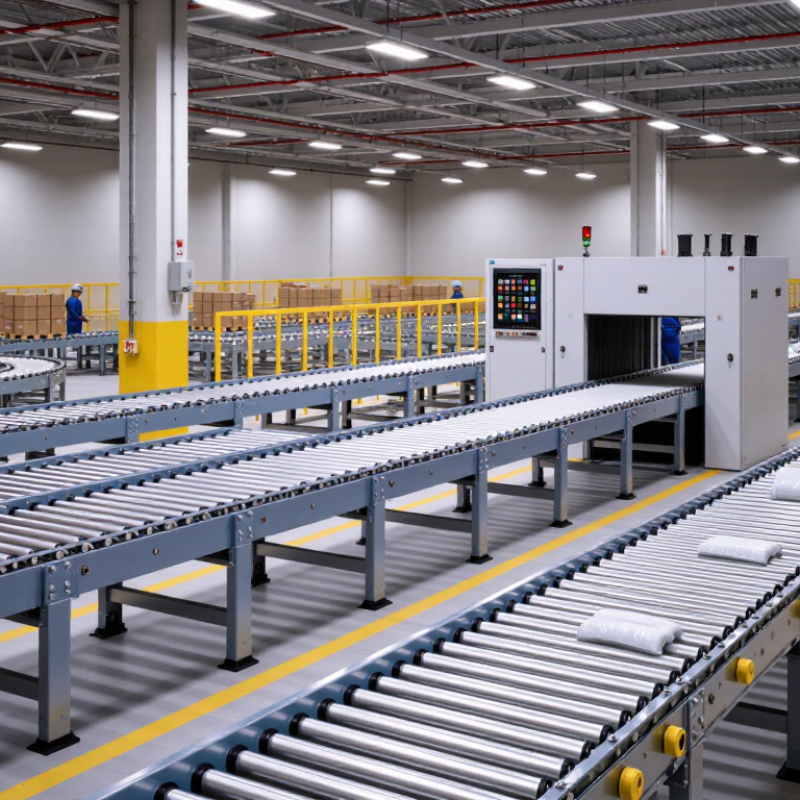
Choosing a roller conveyor in 2026 starts with the material, not the frame. Record each product’s length, width, weight, surface, and temperature. Note fragile edges, unstable shapes, and containers that may tilt. A carton weighing 25 kilograms needs different roller spacing than a small tote. The conveyor should support at least three rollers beneath the load. That rule is practical, but it can fail with flexible bags or uneven bases.
Measure the required flow rate in units per minute, not vague “high volume.” MHI’s 2024 Annual Industry Report identified labor shortages as a continuing challenge for 55% of respondents. This makes reliable movement and simple operator interaction more valuable. Define loading height, accumulation zones, transfer points, and cleaning needs before selecting powered or gravity rollers. CEMA guidance also stresses matching roller capacity and spacing to the actual load. Yet, real facilities are rarely perfect. Dust, rushed loading, and occasional overloaded cartons can expose weak assumptions.
Tips: Test three real products on a short conveyor section. Check starting force, noise, tracking, and safe stopping. Allow capacity above the normal load, but avoid excessive speed. A faster line is not always better. Review the design after one operating week, because early observations often reveal problems that drawings miss. Cite: MHI, 2024 Annual Industry Report; CEMA conveyor design guidance.

Define the material-handling requirements before selecting a roller conveyor. The chart shows representative unit-load capacity ranges commonly used during preliminary conveyor planning. Final specifications should be verified against roller diameter, frame strength, load distribution, speed, and operating conditions.
Use gravity conveyors for simple, low-cost movement; powered roller systems for controlled flow; chain-driven rollers for heavier loads; and belt-driven live rollers when product contact and reliable traction are important.
Gravity, powered, and flexible roller conveyors solve different handling problems. Gravity rollers work well for cartons moving downhill or across short, predictable routes. They use no drive motor, reducing energy use and maintenance points. However, operators may need to push heavy loads manually. Poorly controlled movement can also damage fragile packages.
Powered roller conveyors suit steady throughput, controlled spacing, and accumulation zones. They perform better when cartons vary in weight or move across level floors. MHI’s 2024 Annual Industry Report found that 55% of surveyed organizations planned to increase supply chain technology investment. That trend supports powered automation, but automation is not automatically the best choice. Motors, sensors, controls, and guarding increase installation costs. Noise and maintenance access also deserve attention.
Flexible roller conveyors fit temporary lanes, loading docks, and changing work areas. Their expandable frames can reach into a truck, then fold away. This flexibility is useful, though frequent repositioning may slow operations. Check the smallest package size, maximum load, wheel spacing, incline, and floor condition before choosing. Test a real carton, not an ideal sample. I have seen designs fail because a slightly soft box sagged between rollers. In 2026, compare total operating cost, labor needs, safety controls, and expected throughput. The cheapest conveyor may become expensive when workers must constantly correct its flow.
How to Choose Roller Conveyors in 2026?
Select Conveyor Dimensions, Roller Design, and Load Capacity
Choosing roller conveyors in 2026 starts with the load, not the catalog. Measure product length, width, height, and weight during normal operation. Include packaging changes, tilted cartons, and occasional overhangs. Keep at least three rollers under each unit. Small cartons need closer roller spacing. Long crates need wider support. Conveyor width should exceed load width by 50 to 100 millimeters. This gap reduces rubbing, but excessive clearance can cause skewing.
Roller design should match the product surface and working environment. Steel rollers suit rigid loads and demanding handling areas. Polymer-coated rollers can reduce noise and protect delicate packaging. Grooved or tapered rollers help control direction on curves. Use powered rollers for frequent starts, stops, or rising routes. Gravity rollers work when slope and load remain consistent. Do not choose roller diameter by appearance. Check shaft strength, bearing rating, frame deflection, and operating speed. A larger roller may still fail with weak bearings.
Calculate capacity from the heaviest unit, not average throughput. Add a safety factor for impact, uneven loading, and future changes. A 40-kilogram carton may require a 60-kilogram design rating. That margin protects alignment and service life. The first estimate is often wrong. Site reviews can reveal poor support at transfer points. Inspect mounting points, transfer gaps, and access areas before approval. Test with actual cartons, not sample boxes. Conditions vary.
| Application Type | Recommended Conveyor Width | Typical Roller Diameter | Recommended Roller Pitch | Typical Load per Roller | Recommended Total Load | Roller Material and Design | Typical Speed Range | Best-Fit Loads |
|---|---|---|---|---|---|---|---|---|
| Light-duty manual handling | 300–600 mm | 25–38 mm | 50–75 mm | Up to 25 kg | Up to 150 kg per conveyor section | Galvanized steel or PVC rollers; gravity operation; sealed bearings | Manual transfer to 12 m/min | Small cartons, totes, parcels, and plastic containers |
| General carton conveying | 400–800 mm | 38–50 mm | 75–100 mm | 25–50 kg | Up to 300 kg per conveyor section | Galvanized steel rollers with low-friction bearings; gravity or powered drive | 5–25 m/min | Corrugated cartons, bins, and packaged products |
| Medium-duty warehouse conveying | 500–1,000 mm | 50–60 mm | 75–125 mm | 50–80 kg | Up to 500 kg per conveyor section | Steel rollers with 2.0–3.0 mm wall thickness; crowned or grooved rollers for tracking | 10–30 m/min | Heavy cartons, storage bins, and standard pallets |
| Powered accumulation conveyor | 500–1,000 mm | 50–76 mm | 75–150 mm | 60–100 kg | Up to 800 kg per conveyor section | Driven steel rollers; chain, belt, or line-shaft drive; low-noise bearings | 10–45 m/min | Cartons requiring buffering, accumulation, or controlled release |
| Heavy-duty pallet conveying | 800–1,300 mm | 76–89 mm | 100–150 mm | 100–250 kg | Up to 1,500 kg per conveyor section | Heavy-wall carbon-steel rollers; chain-driven design; reinforced frames and bearings | 6–25 m/min | Loaded pallets, drums, large crates, and industrial containers |
| Extra-heavy industrial conveying | 1,000–1,500 mm | 89–108 mm | 125–200 mm | 200–400 kg | Up to 2,500 kg per conveyor section | Heavy-wall steel rollers with machined sprockets; high-capacity bearings; welded frame | 3–18 m/min | Steel components, machinery bases, dies, and exceptionally heavy pallets |
| Corrosive or washdown environment | 400–1,000 mm | 38–76 mm | 75–125 mm | 25–100 kg | Up to 500 kg per conveyor section | Stainless-steel or corrosion-resistant rollers; sealed hygienic bearings; sloped frame for drainage | 3–20 m/min | Food containers, chemical-resistant totes, and washable packaging |
| High-temperature service | 400–1,000 mm | 50–89 mm | 100–150 mm | 50–200 kg | Up to 1,000 kg per conveyor section | Heat-resistant steel rollers and high-temperature grease; avoid standard PVC components | 3–15 m/min | Hot castings, heat-treated parts, and products leaving ovens |
| Inclined or declined conveying | 400–900 mm | 50–76 mm | 75–125 mm | 40–150 kg | Up to 700 kg per conveyor section | Powered rollers or brake rollers; side guides and positive load control required | 5–30 m/min | Cartons, totes, and pallets moving between elevations |
| Selection note: For stable conveying, use at least three rollers under the shortest load at all times. Size the conveyor for the maximum operating load, include starting and impact forces, and confirm roller, shaft, bearing, frame, and drive ratings with the final equipment supplier. | ||||||||
Automation should match the work, not impress the buying team. Measure cartons, pallets, weight, spacing, and peak hourly flow. The 2024 MHI Annual Industry Report identifies robotics and automation as major investment priorities for supply chain leaders. Select powered rollers when accumulation, routing, or variable speeds matter. Gravity rollers may suit short, predictable transfers. They are simpler, but operators often push loads manually. That detail affects safety.
Safety needs a physical review. Check nip points, transfer gaps, guards, emergency stops, and lockout procedures. OSHA’s machine-guarding requirements support this approach, while ISO 12100 encourages documented risk assessment. A safe conveyor leaves room for hands and feet. Small gaps can become serious hazards. Do not assume a standard guard fits every layout.
Energy performance deserves measured proof. The U.S. Department of Energy reports that motor-driven systems consume about 69% of industrial electricity. Choose efficient motors, suitable gearing, and variable-speed control for changing demand. Record idle time before promising savings. Smart sensors can detect jams, bearing heat, belt drift, and abnormal noise. Useful data should reach maintenance staff quickly. Deloitte’s 2024 Smart Manufacturing and Operations Survey found 86% of executives view smart manufacturing as important for competitiveness. However, connected equipment can create cybersecurity and compatibility problems. Confirm data ownership, access controls, service support, and offline operation. A perfect dashboard cannot repair a poorly specified conveyor.
Installation cost starts with the floor, not the conveyor frame. Measure travel distance, load weight, transfer points, electrical access, and floor tolerance before requesting quotes. A short conveyor may still require guarding, sensors, controls, and weekend labor. MHI’s 2024 Annual Industry Report found that 55% of supply chain professionals planned to increase technology investment. That pressure can make rushed automation attractive.
Do not compare purchase prices alone. Ask for installation hours, commissioning time, spare parts, and operator training. A detailed site survey often exposes hidden costs, such as uneven floors or manual loading changes. A clean spreadsheet can still lie. I would leave a contingency budget, because real warehouses rarely match drawings perfectly.
Maintenance planning should include bearing access, belt or roller replacement, lubrication points, and noise checks. The U.S. Department of Energy reports that predictive maintenance can reduce maintenance costs by 25–30% and unplanned downtime by 35–45%. Those figures are benchmarks, not promises. Choose modular sections, adjustable supports, and standard control interfaces for future expansion. MHI’s report also identifies robotics and automation as major investment priorities, so today’s conveyor should accept tomorrow’s sensors and routing logic. Leave room. A tightly packed line may save floor space now, but it can make later expansion expensive and disruptive.
Content © 2025 Komatsu. All Rights Reserved