Choosing Forklift Parts in 2026 is no longer a simple price comparison. Warehouses now depend on safer, more connected, and more efficient equipment. The World Industrial Truck Statistics report recorded more than two million industrial trucks shipped globally in 2023, showing the scale of this market. Each truck creates continuing demand for filters, forks, tyres, batteries, sensors, seals, and braking components. The wrong part can quietly increase energy use, vibration, downtime, and operator risk.
The U.S. Occupational Safety and Health Administration reports that forklift accidents cause approximately 85 fatalities and 34,900 serious injuries each year. That figure makes component selection a maintenance decision, not merely a purchasing task. Brian Feehan, president of the Industrial Truck Association, has stressed, “Safety must guide every material-handling decision.” His point applies directly to Forklift Parts: verify the model, load rating, dimensions, material quality, and supplier traceability before installation. Certification matters. So does fit.
A reliable 2026 buying process should compare total ownership cost, not only the invoice price. A cheaper battery may charge slowly, lose capacity early, or disrupt a busy shift. An aftermarket seal may fit today but fail beside a cold dock door tomorrow. These details are easy to overlook. I have seen how small mismatches create large maintenance problems. Still, even professional recommendations need checking. Warehouse conditions differ, product labels can be incomplete, and supplier claims deserve evidence. The best choice combines manufacturer specifications, service history, technician experience, and independent safety guidance.
How to Choose Forklift Parts in 2026?
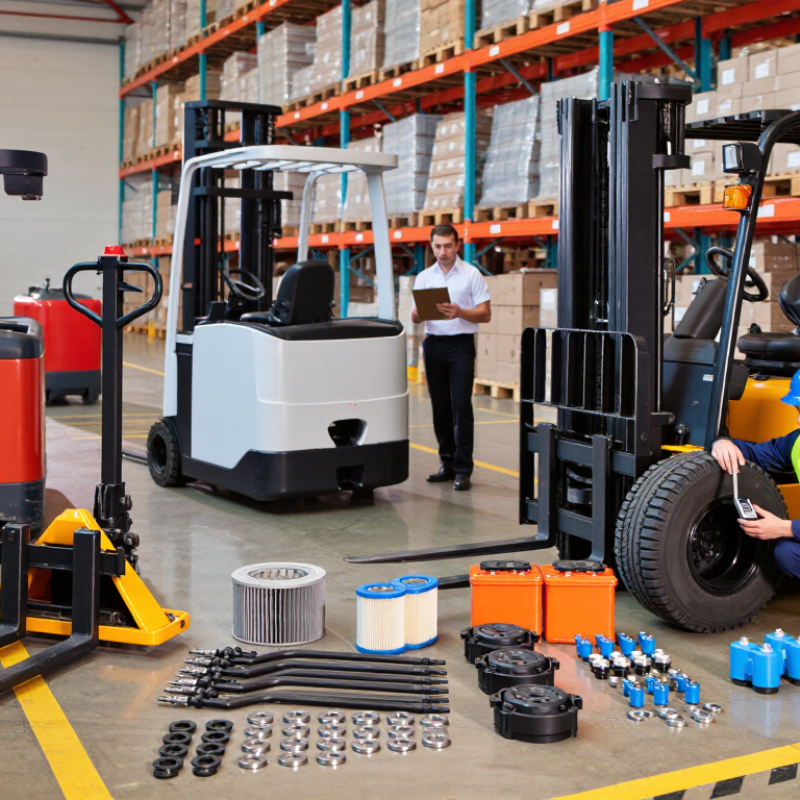
Forklift parts are the working pieces that support lifting, steering, braking, and power. They include forks, mast rollers, lift chains, hydraulic seals, tires, filters, batteries, and brake components. Each part affects how safely and smoothly the truck operates. A worn fork may show cracks, heel wear, or uneven thickness. A damaged chain can create sudden movement during lifting. These details deserve careful attention.
Part quality matters because forklifts carry heavy loads in limited spaces. Reliable parts usually have accurate dimensions, suitable materials, clear specifications, and traceable inspection records. The correct hydraulic seal should match pressure, temperature, and fluid requirements. Tires need the right size and load rating. Forks must match the attachment system and rated capacity. Fit matters. Small errors grow.
In 2026, maintenance teams can use digital service records to compare operating hours, failures, and replacement intervals. This supports better purchasing decisions, but records are not enough. Physical inspection still matters. Check surface damage, unusual noise, leaks, and loose connections before installation. A cheaper part may reduce the invoice while increasing downtime later. Still, expensive does not always mean better. I have seen suitable parts rejected because their paperwork was unclear, and approved parts installed without checking wear around them. That mistake is easy to repeat. Ask for test evidence, installation guidance, and compatibility details before ordering.
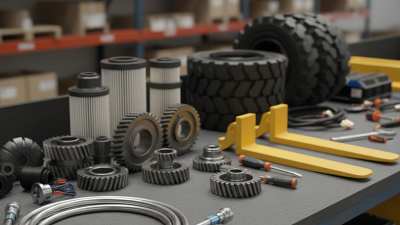
Forklift parts include batteries, forks, tires, mast components, hydraulic parts, brakes, and filters. Every replacement part should match the truck’s specifications, operating environment, and required load capacity.
Common nominal traction-battery voltages include 24V, 36V, 48V, 72V, and 80V. The correct voltage must match the forklift data plate and charger. High-quality parts improve fit, service life, operating reliability, and workplace safety.
Reference: OSHA 29 CFR 1910.178 requires powered industrial trucks to be examined at least daily or after each shift when used around the clock. Battery voltage values shown are common nominal industrial configurations; always verify the original equipment specifications before purchase.
Choosing forklift parts in 2026 starts with accurate model identification. The World Industrial Truck Statistics report recorded over two million industrial truck deliveries worldwide in 2023. That scale creates many similar-looking components. A hydraulic filter may fit several machines, yet its thread, bypass setting, or seal material can differ.
Record the manufacturer, model code, serial number, mast type, lifting capacity, and production year. Photograph the identification plate before ordering. Then compare the original part number, dimensions, connection type, voltage, and load rating. ISO 5057 guidance also supports careful inspection of fork dimensions and visible damage. Small differences matter. A six-millimeter mismatch can cause leakage, vibration, or unsafe loading. I have seen technicians trust color and shape too quickly. That approach is convenient, but it is not reliable.
Tips: Measure twice. Check the service manual. Confirm the serial-number range with a qualified parts supplier. For electrical parts, record voltage, connector position, and controller specifications. For wear parts, compare thickness, hole spacing, and material grade. OSHA reports that powered industrial trucks contribute to roughly 35,000 serious injuries annually in the United States, so “nearly compatible” is not a safe specification. Keep the failed part for comparison, unless damage makes handling unsafe. Review your selection with a trained technician when records conflict. Mistakes usually begin with incomplete data, not difficult machinery.
| Identification Dimension | Typical Forklift Category | Typical Capacity and Load Center | Power System | Key Part Specification to Confirm | Required Identification Evidence |
|---|---|---|---|---|---|
| Class I Electric counterbalanced forklift |
Seated electric forklift for indoor and paved-surface operations | Approximately 1,000–8,000 kg; common load centers are 500 mm or 600 mm | Lead-acid or lithium-ion battery; common system voltages include 24 V, 36 V, 48 V, 72 V and 80 V | Battery voltage and capacity, connector type, drive-motor rating, controller compatibility, tire dimensions and mast lift height | Data plate, serial number, battery label, controller label and connector photographs |
| Class II Electric narrow-aisle forklift |
Reach truck, order picker or very-narrow-aisle electric truck | Approximately 1,000–2,500 kg; load center commonly 500–600 mm | Battery-powered electric drive; voltage and battery compartment dimensions vary by configuration | Mast type, reach stroke, fork length, platform or seat configuration, steering sensor, lift motor and battery dimensions | Full truck model code, serial number, mast identification plate and measurements of the battery compartment |
| Class III Electric pallet and stacker truck |
Walkie pallet truck, rider pallet truck or walkie stacker | Approximately 1,000–2,000 kg; pallet load center commonly 600 mm | Battery-powered; compact units commonly use 12 V or 24 V systems, while larger units may use higher voltage | Fork length and width, fork outside spacing, wheel diameter, tiller-head design, battery type and lifting capacity | Truck data plate, fork measurements, wheel markings, battery label and photographs of the tiller assembly |
| Class IV Internal-combustion cushion-tire forklift |
Indoor or smooth-surface forklift with solid cushion tires | Approximately 1,500–8,000 kg; load center commonly 500–600 mm | Internal-combustion engine using fuel-specific components; cushion tires designed for hard, level surfaces | Fuel type, engine family, transmission type, tire compound, tire dimensions, mast height and brake configuration | Model and serial plate, engine identification label, tire sidewall markings and fuel-system details |
| Class V Internal-combustion pneumatic-tire forklift |
Outdoor forklift with pneumatic or solid-pneumatic tires | Approximately 1,500–16,000 kg; load center commonly 500–600 mm, with larger units using longer load centers | Diesel, liquid petroleum gas or gasoline engine, depending on the truck configuration | Engine family, fuel system, tire size and ply rating, axle type, hydraulic flow, mast capacity and attachment rating | Truck data plate, engine plate, tire sidewall data, hydraulic identification and attachment capacity plate |
| Part Group | Specifications to Match | Measurements or Codes to Record | Common Mismatch Risk |
|---|---|---|---|
| Forks | Fork length, cross-section, rated capacity, blade thickness, shank height and fork mounting class | Length, width, thickness, shank height, fork spacing and load capacity | A fork may physically fit but have insufficient capacity or an incorrect mounting class |
| Mast and Lift Components | Mast stage, collapsed height, maximum lift height, roller size, chain type and hydraulic-cylinder dimensions | Mast code, lift height, chain pitch, roller outside diameter, pin diameter and cylinder rod diameter | The same truck model may be supplied with different mast stages and lift heights |
| Wheels and Tires | Tire type, outside diameter, width, rim diameter, tread pattern, compound and load rating | Complete sidewall marking, wheel bolt pattern, hub diameter and axle position | Front and rear tires often have different sizes and load requirements |
| Battery and Charging Parts | Nominal voltage, ampere-hour capacity, battery dimensions, terminal layout, connector type and charger output | Voltage, Ah rating, length, width, height, connector orientation and charger voltage/current | Incorrect voltage or connector polarity can damage electrical systems and create safety hazards |
| Hydraulic Parts | Port size, thread standard, pressure rating, flow rating, seal material and cylinder stroke | Port thread, hose inside diameter, working pressure, rod diameter, barrel diameter and stroke | Similar-looking fittings may use different thread standards or pressure ratings |
| Engine and Fuel Parts | Engine family, displacement, fuel type, filter dimensions, belt profile and emissions configuration | Engine code, filter length and diameter, belt length, fuel-system type and connector shape | The same forklift model may use different engines across production years or markets |
| Electrical and Control Parts | System voltage, connector pinout, software or firmware version, current rating and sensor type | Part number, voltage, amperage, connector count, pin arrangement and diagnostic code | An electrically compatible-looking component may require a different controller calibration or wiring layout |
| Filters and Service Parts | Filter type, filtration rating, dimensions, gasket size, fluid specification and service interval | Outside diameter, inside diameter, height, thread size, gasket dimensions and application | A filter with the correct external dimensions may still have the wrong filtration or bypass specification |
Choosing between OEM, aftermarket, and rebuilt forklift parts requires more than comparing prices. Check the part number, dimensions, load rating, and machine serial information before ordering. A small mismatch in a mast roller can create uneven lifting and expensive downtime. Measure twice. Then verify the supplier’s technical documents and warranty terms.
OEM parts usually provide the most predictable fit and performance. They can be the sensible choice for safety-critical components, such as brake assemblies, steering parts, and load chains.
Aftermarket parts may reduce costs and offer useful availability. However, quality varies between manufacturers. Look for material specifications, test records, and clear return policies. A low price is not evidence of value.
Rebuilt parts can work well when technicians inspect, replace, and test every critical component. Ask whether worn seals, bearings, electrical contacts, and friction surfaces were replaced or merely cleaned. Traceable inspection records matter. A rebuilt hydraulic pump may perform reliably, but poor internal measurements can shorten its service life.
This is where buyers often make mistakes. I would compare total operating cost, not only the invoice. Consider installation time, failure risk, warranty coverage, and the cost of another breakdown. Even experienced teams should review their assumptions when a part fits perfectly but lacks dependable documentation.
Part selection should begin with safety, not price. OSHA reports that powered industrial trucks cause about 85 workplace deaths and 34,900 serious injuries annually in the United States. That figure makes a small-looking component important. Inspect forks for cracks, bending, heel wear, and uneven thickness. Check chains, brakes, tires, hydraulic hoses, and guards for damage. ANSI/ITSDF B56.1 requires inspection and maintenance practices that support safe operation. A part that “almost fits” is not acceptable.
Compatibility requires evidence. Record the truck’s model, serial number, capacity, mast type, mounting dimensions, voltage, and hydraulic pressure. Compare these details with the part specification sheet, not only a photograph. ISO 3691-1 emphasizes stability, braking, visibility, and control-system safety. A mismatched valve can create slow lifting, sudden movement, or overheating. It may still appear functional. That is the dangerous part.
Service life depends on workload and environment. A forklift moving loads indoors differs from one handling dust, moisture, or cold storage. Review operating hours, load cycles, corrosion, and maintenance records. Replace parts when wear limits are reached, not when failure becomes obvious. I have seen checklists completed too quickly. No checklist is perfect. Recheck critical measurements before installation, and document the inspection date, technician, and test results. NIOSH guidance also supports planned maintenance and operator training as practical controls against recurring incidents.
How to Choose Forklift Parts in 2026?
How to Purchase, Install, and Maintain Forklift Replacement Parts
Begin with the forklift’s exact model, serial range, and operating environment. A warehouse truck lifting paper rolls needs different parts from one handling frozen goods. Check the part number, dimensions, material, load rating, and revision level. Ask the supplier for inspection records, warranty terms, and installation guidance. Photos help, but they are not enough. Measure twice. A cheaper seal may fit today and fail after a week. That mistake can stop a shift and damage nearby components.
Before installation, park on level ground and remove the ignition key. Lower the forks fully and secure raised equipment with approved supports. Use the service manual and calibrated tools for torque settings. Never force a bearing, chain, hose, or electrical connector into place. It may look efficient. It is not. Record torque values, replaced components, and unusual findings. Even experienced technicians can overlook a small washer or incorrect spacer.
After installation, perform a controlled test without a load. Check steering, braking, lifting speed, warning alarms, and fluid leaks. Listen for clicking, grinding, or uneven movement. Add the new part to a maintenance schedule, not just a repair invoice. Inspect high-wear components at set intervals and keep the area clean during servicing. Hydraulic hoses need careful examination near bends and fittings. Chains require correct tension and lubrication. Maintenance advice can be imperfect when operating conditions change, so review the schedule after heavy use, dust exposure, or repeated faults.
Content © 2025 Komatsu. All Rights Reserved