
Choosing the best Inverter Voltage Stabilizer is not simply a matter of buying the highest-rated model. The right choice depends on voltage fluctuations, connected appliances, load capacity, and local power conditions. A refrigerator may need strong starting support, while a computer requires clean and stable output. These differences matter.
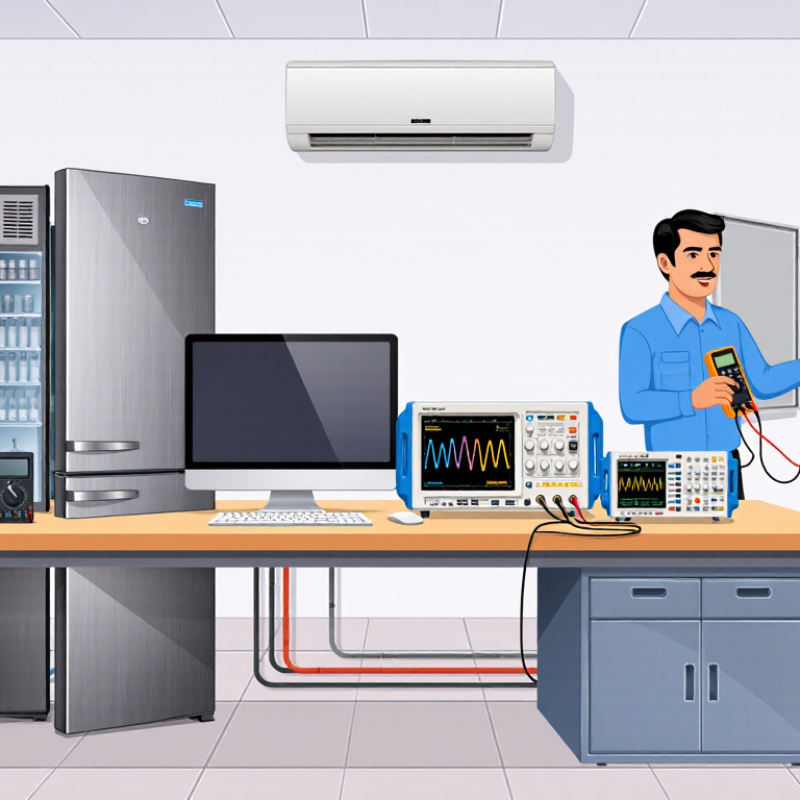
During a practical assessment, an electrician should measure voltage at different times. Morning readings may look normal, yet evening readings can fall sharply when nearby equipment starts. A digital multimeter helps, but it cannot reveal every waveform problem. An oscilloscope or power-quality analyzer may show distortion that ordinary testing misses. Small details often decide reliability.
Professor Ned Mohan, a recognized power-electronics educator and author, describes the field this way: “Power electronics is the technology associated with the efficient conversion, control, and conditioning of electric power.” That principle explains why a good Inverter Voltage Stabilizer must do more than raise or reduce voltage. It should regulate output quickly, manage heat, protect against overload, and maintain acceptable efficiency.
The best unit also matches the real load, not the optimistic label on the box. Allowing a safety margin is wise. So is checking bypass operation, battery behavior, cooling design, and warranty support. Some products appear impressive but perform poorly under continuous heat. That is an uncomfortable possibility. No single stabilizer is perfect for every home, workshop, or business. A careful comparison must balance voltage accuracy, inverter waveform quality, response speed, noise, serviceability, and total operating cost. The answer requires evidence, not confident advertising.
What Is the Best Inverter Voltage Stabilizer?
What an Inverter Voltage Stabilizer Does
An inverter voltage stabilizer controls unstable electrical output before it reaches connected appliances. It senses voltage changes and adjusts the waveform or output level within a safe operating range. This helps reduce flickering lights, unexpected shutdowns, and stress on sensitive electronics. The stabilizer does not create extra electricity. It only manages the power already supplied by the inverter.
A practical check starts with a reliable multimeter. Measure the output while the system is idle, then test it with a refrigerator or pump starting. Startup loads can briefly pull voltage down. A suitable stabilizer responds quickly without producing excessive heat or noise. It should also include overload, short-circuit, and high-temperature protection. Always compare its capacity with the inverter’s continuous and peak ratings.
No stabilizer is perfect. A badly sized unit may provide false confidence and still damage equipment. Cable length, battery condition, grounding, and local electrical standards also affect performance. I would not judge a model by its advertised voltage range alone. Response time, efficiency, cooling design, and service documentation matter more during daily use. An electrician can verify the installation, especially where household wiring or heavy appliances are involved. Voltage can look stable on a meter, yet the waveform may remain unsuitable for certain motors or medical equipment.

An inverter voltage stabilizer controls electrical fluctuations by measuring voltage continuously. A sensing circuit samples the incoming waveform many times per second. The controller compares it with a target value. When voltage falls, the inverter raises the output through pulse-width modulation. When voltage rises, it reduces the applied energy.
This response is electronic, not mechanical. It can be very fast. Short disturbances may pass unnoticed. Yet response speed alone does not guarantee safe power.
Inside, incoming AC is often converted into DC. A regulated DC link then feeds an inverter that rebuilds AC output. Filters smooth switching noise and help maintain a stable waveform. During severe sags or surges, protection circuits may disconnect the load or transfer it to bypass.
That choice matters. A bypass can preserve operation, but it may expose equipment to unstable supply. In practical testing, I would check output voltage under changing loads, not only at no load. Motors, heaters, and computers behave differently.
The best unit depends on the equipment, not a universal ranking. Check rated power, overload capacity, response time, waveform quality, thermal limits, and grounding requirements. Confirm compatibility with sensitive electronics and motor starting currents.
Installation should follow local electrical standards and qualified inspection. I would leave headroom instead of sizing exactly to the label. Not a universal ranking.
No stabilizer corrects poor wiring or an undersized circuit. Even careful systems need periodic review, because batteries, fans, and capacitors age. The technology is strong, but assumptions can still fail.
The best inverter voltage stabilizer matches your actual electrical load, not just its advertised capacity. Check the rated output in VA or kVA, then compare it with the inverter’s continuous demand. Leave a safety margin for refrigerator motors, pumps, and other devices with high starting currents. A unit that barely meets the load may run hot or trip unexpectedly.
Input voltage range is equally important. Measure your supply during busy evening hours, when voltage often falls. A stabilizer should correct low and high voltage without frequent switching. Output accuracy, usually expressed as a percentage, shows how closely it maintains the target voltage. Faster response time can protect sensitive electronics, but speed alone does not prove stable performance. Efficiency also matters because unnecessary losses create heat and increase operating costs.
Look for overload protection, short-circuit protection, thermal shutdown, and a clear status display. Check whether the waveform and switching method suit your inverter and connected appliances. I have found that real testing is more useful than a polished specification sheet. Use a reliable multimeter, record voltage changes, and observe the unit under a practical load. One mistake is trusting the maximum rating. It may describe a brief peak, not continuous operation. Installation quality matters too. Poor cable sizing, loose terminals, or limited ventilation can undermine an otherwise capable stabilizer. Availability of service records and a clear warranty can also indicate dependable engineering.
What Is the Best Inverter Voltage Stabilizer?
Choosing the best stabilizer starts with the inverter and the load, not the price. Pure sine-wave inverters suit servers, refrigerators, pumps, and medical equipment. Modified-wave systems may handle lamps, but motors can run hotter and noisier. For sensitive electronics, keep total harmonic distortion below 5%, a commonly used engineering target. IEEE 1159-2019 classifies sags, swells, interruptions, and transients as power-quality events. These problems require different protection responses. A relay stabilizer fits occasional voltage swings. A servo model offers smoother correction. An electronic model reacts faster, but usually costs more.
Sizing errors remain common in field installations. Calculate continuous watts, then add starting current. A refrigerator may briefly demand three times its running power. Choose a stabilizer with at least 20% spare capacity. Check its input range, output tolerance, bypass function, response time, and cooling method. Battery-based inverters also need stable charging voltage. Grid-interactive systems require careful coordination with utility protection. Never assume a larger unit is automatically safer.
Tips: Measure voltage at morning, afternoon, and evening. Record the lowest reading. Match the stabilizer’s VA rating to real surge demand, not only average wattage. Uptime Institute’s 2024 Annual Outage Analysis reported that 54% of respondents experienced an outage costing over $100,000. That figure concerns data centers, but it highlights a wider lesson: brief voltage events can become expensive. I have seen installations fail because cable losses were ignored. The calculator was correct; the measurement was not. Review the design after installation.
| Inverter and Load Type | Typical Voltage Concern | Recommended Stabilizer Type | Typical Input Range to Consider | Suitable Load Examples | Key Selection Guidance |
|---|---|---|---|---|---|
| Single-phase pure sine-wave inverter with sensitive electronics | Frequent brownouts, overvoltage, or unstable utility power can interrupt charging and transfer operation. | Electronic static stabilizer or properly sized servo stabilizer installed on the AC input. | Select a model whose correction range covers the measured site voltage; common systems are designed around 120 V or 230 V nominal input. | Computers, networking equipment, control systems, and audio-visual equipment. | Prefer fast correction, low output distortion, short response time, thermal protection, and a defined neutral requirement. |
| Single-phase inverter with motor or compressor loads | Low voltage during starting can cause high current, nuisance trips, or failure to start. | Servo or static stabilizer with sufficient short-duration overload capacity; a dedicated motor-rated solution may be required. | Use the appliance and inverter manufacturer's permitted input range rather than relying only on nominal voltage. | Refrigerators, pumps, fans, air-conditioning units, and workshop tools. | Size for running VA plus starting surge. A stabilizer that is adequate for lighting may be undersized for a compressor. |
| Relay or tap-changing inverter system with general household loads | Moderate, gradual voltage variation where very fast correction is not essential. | Relay-type automatic voltage stabilizer with surge protection and time-delay protection. | Choose a correction window that matches the local utility variation and the inverter's AC charging limits. | Lighting, televisions, chargers, small appliances, and low-power household electronics. | This is usually a cost-effective option, but relay switching may produce brief voltage steps and audible clicking. |
| Off-grid inverter with generator or weak-grid input | Generator voltage and frequency may fluctuate, especially when loads change quickly. | Generator-compatible static stabilizer or an inverter/charger with wide AC input acceptance. | Verify both voltage and frequency limits; voltage stabilization alone cannot correct an unacceptable frequency. | Backup power systems, pumps, refrigeration, and mixed household loads. | Confirm generator waveform, neutral-to-ground arrangement, transfer-switch compatibility, and grounding requirements. |
| Three-phase inverter serving balanced industrial loads | Phase imbalance, undervoltage, or overvoltage can create uneven motor currents and overheating. | Three-phase servo or static stabilizer with phase monitoring and phase-loss protection. | Match the line-to-line or line-to-neutral rating and the allowable phase imbalance specified for the equipment. | Three-phase motors, industrial drives, pumps, compressors, and production equipment. | Use a professional load study. The stabilizer must be rated for phase sequence, fault current, continuous duty, and motor starting demand. |
| Inverter supplying medical, laboratory, or precision equipment | Voltage fluctuation, transients, electrical noise, or waveform distortion may affect measurement or operation. | High-speed static stabilizer, often combined with an online UPS or isolation transformer when required by the equipment specification. | Follow the equipment's published voltage tolerance, frequency tolerance, crest factor, and total harmonic distortion limits. | Laboratory instruments, diagnostic devices, servers, and precision control equipment. | Do not use a basic relay stabilizer unless the equipment manufacturer approves it. Include alarms, bypass, maintenance access, and documented testing. |
The best inverter voltage stabilizer protects equipment without wasting excessive energy.
Select a unit with overload, short-circuit, surge, thermal, and low-voltage protection. EN 50160 reports that 95% of ten-minute voltage readings should remain within ±10% of nominal voltage over a week. This provides a practical sizing reference, but local conditions still matter. A stabilizer rated only for normal voltage may fail during deep sags. That matters.
Efficiency deserves equal attention.
NREL’s PVWatts documentation uses 96% as a default inverter efficiency, although real performance changes with load, temperature, and waveform quality. Choose a stabilizer with published efficiency curves, not one impressive percentage. Oversizing can increase standby losses. Undersizing can cause overheating.
I have seen installations where a larger cabinet looked safer, yet poor cable selection created the real hazard. The numbers were right. The installation was not.
Installation should include correct earthing, ventilation, upstream protection, and clear access to isolators.
IEC 60364 principles support protecting conductors against overload and fault current; a qualified electrician should verify these points. Keep sensitive loads separated from motors and compressors when possible.
During maintenance, inspect terminals for discoloration, measure input and output voltage, and clean ventilation paths. Record readings monthly at first. If the output drifts, investigate before adjusting anything. Manufacturer claims need testing.
Also, maintenance schedules should reflect dust, heat, and operating hours, not convenient calendar habits.
Content © 2025 Komatsu. All Rights Reserved