Choosing a Flame Retardant Cable in 2026 requires more than comparing prices, colors, or catalogue claims. The decision affects evacuation routes, data centers, hospitals, tunnels, and industrial facilities. According to the National Fire Protection Association’s Fire Loss in the United States During 2023 report, U.S. fire departments responded to approximately 1.5 million fires. These incidents caused 3,670 civilian deaths, 13,250 injuries, and about $22.4 billion in property damage. Cables cannot prevent every fire. They can, however, influence flame spread, smoke production, and circuit survival.
Performance must be verified against the installation’s real hazards. IEC 60332-1-2 evaluates vertical flame propagation on a single insulated wire or cable. IEC 60754 addresses halogen acid gas emissions, while IEC 61034 measures smoke density. A Flame Retardant Cable may pass one test and still perform poorly in another. That detail is often missed. The label alone is not enough.
Fire researcher Richard G. Gann has observed, “Fire is a complex phenomenon, and no single measurement can describe it.” His warning applies directly to cable selection. A responsible specification should examine conductor size, insulation material, fire rating, smoke behavior, toxicity, bending conditions, installation density, and third-party certification. It should also consider maintenance records and actual fault scenarios. A cable installed beside tightly packed trays faces a different challenge from one placed in open air. Perfect choices do not exist. Better decisions come from evidence, transparent testing, and honest recognition of uncertainty. This guide explains how to compare Flame Retardant Cable options in 2026 without trusting marketing language alone.
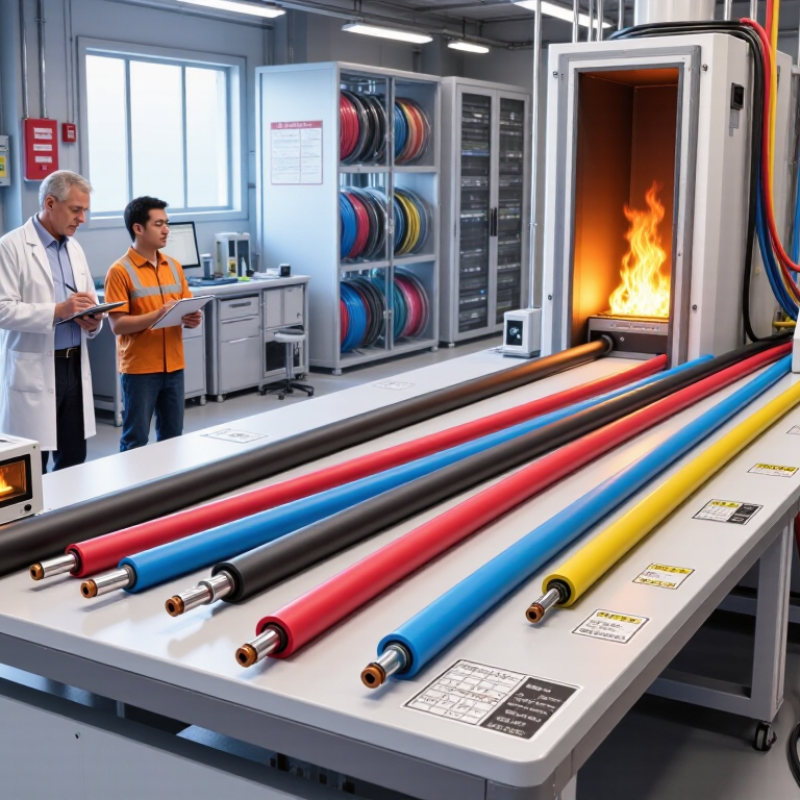
Choosing a flame retardant cable starts with its test rating, not its marketing description. IEC 60332-1-2 evaluates flame spread on a single vertical cable. IEC 60332-3 examines grouped cables, where fire can travel upward between several installed lines. These tests are different. A cable passing one test may not pass the other.
Check the required standard for your project location. European installations may use EN 60332 and CPR classification under EN 50575. CPR classes range from Aca to Fca, with smoke and flaming-droplet ratings added separately. In North American projects, VW-1 testing is common, but it does not replace every system requirement. Always read the full test report.
Smoke matters too. IEC 61034 measures smoke density, while IEC 60754 evaluates corrosive gases released during burning. Low-smoke does not automatically mean low toxicity or zero halogens. The wording can mislead. A practical inspection should compare conductor size, insulation material, voltage rating, bend radius, and installation grouping. I once treated flame resistance as the main selection factor; that checklist was too simple. Cable spacing and tray design can change real fire behavior. Verify the certificate, test method, cable construction, and local electrical rules before ordering.

Choosing a flame-retardant cable starts with the installation environment, not the label on the package. A cable suitable for a dry office may fail in a damp basement or service tunnel. Inspect temperature, humidity, sunlight, chemicals, vibration, and available space. In a crowded ceiling void, limited airflow can increase heat around the cable. In a vertical shaft, flames may travel upward quickly. Tight bends can also damage insulation before the cable is energized.
Do not rely on the phrase “flame retardant.” It does not mean fireproof. Identify nearby ignition sources, combustible materials, evacuation routes, and the expected fire exposure time. Hospitals, transport facilities, and high-rise buildings may also require low-smoke performance. That detail matters when visibility is already poor. Review fire-test reports, installation ratings, conductor temperature limits, and certificates from competent testing laboratories. Check whether the test matches the complete cable design, not only one material.
An easy assumption is choosing the strongest-looking cable. That can be wrong. A heavier construction may create difficult bends, poor termination, or unnecessary cost. I would record the site conditions, then compare them with the project specification and local fire requirements. Ask a qualified electrical professional to verify the selection before installation. Small oversights, such as an unsealed cable penetration, can undermine otherwise careful fire protection.
Cable material affects both fire behavior and long-term reliability. PVC insulation is economical and widely used, but it can release dense smoke and corrosive gases when burning. LSZH compounds reduce smoke and halogen emissions, making them suitable for crowded buildings, transport areas, and enclosed equipment rooms. They may, however, require tighter control during installation. Some formulations are less flexible in cold conditions.
XLPE insulation offers strong thermal performance and useful electrical stability. It can support higher conductor temperatures when the system is designed correctly. The insulation alone does not make a cable fire-safe. Check the complete construction, including sheath material, fillers, screens, and conductor spacing. Small details matter.
Fire performance should be verified through documented test results, not a sales phrase. Review flame-spread, smoke-density, and corrosive-gas data against applicable standards, such as IEC 60332, IEC 60754, and IEC 61034.
For emergency circuits, assess circuit-integrity ratings and the required survival time. A cable that resists flame may still fail under mechanical stress or excessive heat. That is easy to overlook. Inspectors should also confirm bending radius, tray loading, termination methods, and batch certificates. A simple flame test is not enough. There is no perfect cable; the best choice depends on fire risk, ventilation, temperature, installation space, and maintenance quality.
How to Choose Flame Retardant Cable in 2026?
Choosing a flame retardant cable starts with electrical requirements, not the label. Confirm voltage, operating current, conductor size, temperature range, and installation length. A cable that passes a flame test may still overheat under continuous load. The NFPA’s Fire Loss in the United States During 2023 report recorded about 1.39 million fires, showing why small design errors deserve attention. Check voltage drop, especially in long trays and crowded risers. Do not rely only on a larger conductor.
Safety features should match the building environment. IEC 60332 tests flame propagation, while IEC 60754 evaluates acidic gases released during combustion. IEC 61034 measures smoke density. Low-smoke, zero-halogen construction can reduce corrosive emissions in enclosed public spaces, but it is not automatically the best choice everywhere. Some cables need stronger mechanical protection, water resistance, or oil resistance. That detail is often missed.
Certification records need careful checking. Verify the exact cable size, insulation material, temperature rating, and test standard on the certificate. European installations may require reaction-to-fire classification under EN 50575, while other projects may specify national electrical codes. Ask for traceable test reports, production-batch information, and installation instructions. The International Energy Agency reported that global electricity demand rose by around 4% in 2024, increasing pressure on electrical infrastructure. Yet certification alone cannot fix poor routing or loose terminals. I would still inspect the cable after installation, because real sites are rarely as clean as drawings.
Selecting a reliable flame retardant cable supplier starts with verified performance, not attractive catalog language. The NFPA Home Structure Fires report for 2018–2022 found electrical distribution and lighting equipment involved in 55% of home fires linked to electrical failure or malfunction. This makes supplier quality a safety decision. Ask for current test reports covering IEC 60332 flame propagation, IEC 60754 corrosive gases, and IEC 61034 smoke density. For construction projects, confirm the applicable EN 50575 reaction-to-fire classification.
A dependable supplier should provide batch traceability, conductor resistance results, material declarations, and clear production dates. Request a sample from the same lot as the planned shipment. Inspect its 100-meter drum, lot code, insulation surface, and printed markings. Small details matter. Compare the declared bending radius with your installation route, especially around trays and narrow risers. Industry procurement reports frequently identify quality consistency and supply transparency as major cable-buying concerns, yet a datasheet can still be incomplete. I would not accept a certificate without checking the laboratory scope, test date, and cable construction. Some suppliers also confuse flame retardant performance with fire resistance. That mistake can become expensive during an audit. A factory visit, witnessed sampling, and independent retesting may slow procurement, but they expose weaknesses before installation.
Content © 2025 Komatsu. All Rights Reserved