China Top 10 Forklift Classes for Global Buyers?
Choosing among the China top 10 forklift classes requires more than comparing lifting capacity or purchase price. Global buyers must match each truck with the task, floor, load, fuel source, and local training requirements. The seven standard classes cover electric counterbalance trucks, internal-combustion counterbalance trucks, narrow-aisle machines, reach trucks, pallet trucks, rough-terrain forklifts, and specialized warehouse equipment.
The World Industrial Truck Statistics report recorded more than two million industrial truck shipments worldwide in 2023. That figure shows strong demand, but it does not make every model suitable for every warehouse. A Class I electric forklift may work quietly on polished concrete. A Class IV cushion-tire truck may perform better in a loading bay. A Class VII rough-terrain forklift needs different stability controls, tires, and operator judgment.
Safety remains central. OSHA’s powered industrial truck guidance requires employers to provide training, evaluation, and refresher instruction when conditions change. Patrick Kapust, former OSHA enforcement leader, has emphasized the principle: “Training must match the truck and the workplace.” The wording is simple. The decision is not.
This guide compares ten widely requested Chinese forklift categories through an international buyer’s lens. It considers capacity, energy use, mast design, terrain, service access, certification evidence, and export support. Some rankings will remain debatable. That is useful. A low-cost truck can become expensive when parts arrive slowly or operators struggle with controls. Buyers should verify specifications directly, request test records, and inspect real working conditions before ordering. The best Forklift Classes choice is rarely the cheapest one. It is the one that stays productive, stable, and supportable after delivery.
Forklift Classes Explained: A Global Buyer’s Basic Guide
China Top 10 Forklift Classes for Global Buyers?
Forklift Classes Explained: A Global Buyer’s Basic Guide
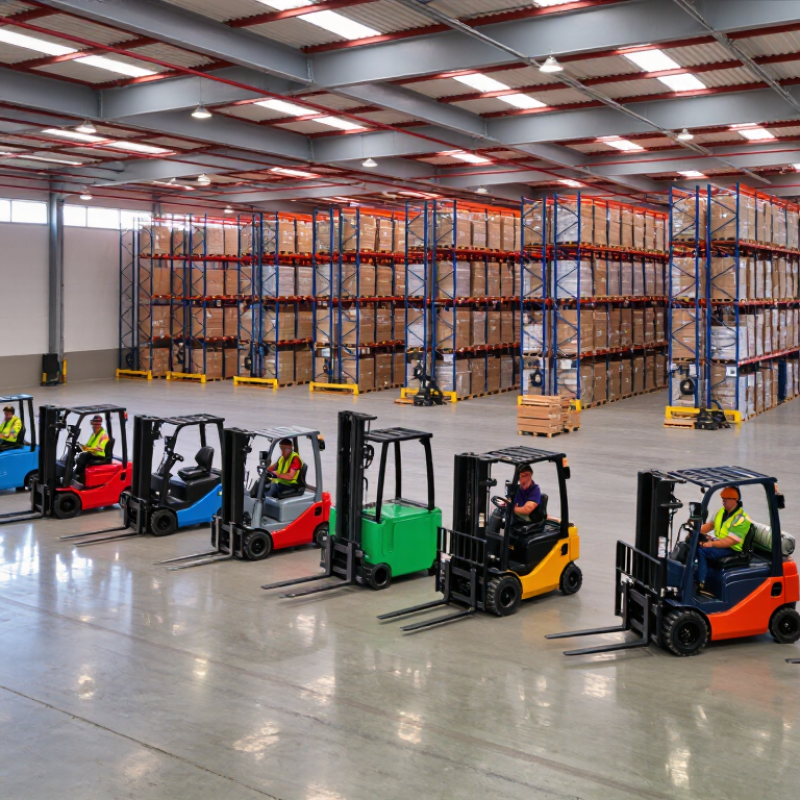
Forklift classes describe operating design, power source, tires, and working environment. They do not simply show lifting capacity. The commonly used industrial system contains seven main classes, not ten.
Class I covers electric rider forklifts. Class II includes narrow-aisle electric trucks. Class III covers electric pallet trucks and stackers. Class IV uses cushion tires with internal-combustion engines. Class V uses pneumatic tires for outdoor surfaces. Class VI refers to tow tractors. Class VII covers rough-terrain forklifts.
Some global buyers also separate reach trucks, counterbalance trucks, order pickers, and container handlers as practical categories. These are useful purchasing terms, but they are not always official classes. A neat label can still mislead. Check the load center, rated capacity, maximum lift height, and aisle width before comparing quotations.
In real warehouse assessments, floor condition often changes the decision. Smooth concrete may suit an electric Class I truck, while gravel needs pneumatic tires and stronger ground clearance. Battery charging space, ventilation, noise limits, climate, and service support also matter.
Ask for test records, stability information, spare-parts availability, and operator training details. One overlooked measurement can create daily delays.
Buyers sometimes focus on the highest lifting capacity and ignore residual capacity at full height. That mistake is common, and expensive.
Regional standards may use different terminology, so confirm the classification with an experienced inspector before ordering.
Class 4 to Class 6: Internal Combustion and Specialty Forklifts
Class 4 to Class 6 forklifts serve demanding industrial work, but their designs differ sharply. Class 4 forklifts use cushion tires and internal combustion engines. They perform well on smooth warehouse floors, loading bays, and paved factory yards. Their compact turning radius helps in narrow production areas. However, cushion tires lose traction on broken concrete or wet outdoor surfaces.
Class 5 forklifts usually use pneumatic tires and internal combustion power. They suit lumber yards, container handling areas, construction supply sites, and uneven outdoor ground. Diesel models often provide strong torque for long shifts. Gas-powered units may offer cleaner operation around semi-enclosed areas, though ventilation remains essential. Buyers should check mast height, residual capacity, tire pattern, and local emissions requirements. A forklift rated at 5,000 kilograms may lift far less at maximum height.
Class 6 covers electric and internal combustion tractors designed mainly for towing. Airports, factories, and distribution centers use them to move trailers or carts across repeated routes. They are not substitutes for standard counterbalance forklifts. Specialty versions may include side-shifting equipment, long-load platforms, or customized attachments. Every attachment changes the load center and reduces usable capacity. In practice, many purchasing mistakes come from choosing engine power before measuring aisle width, floor condition, turning space, and daily travel distance. Even experienced teams sometimes overlook battery charging space or operator visibility. That deserves a second review.
China Forklift Classes 4–6: Classification Features for Global Buyers
This chart summarizes defining characteristics under the widely used forklift classification system. Class IV trucks use internal-combustion engines with cushion tires, Class V trucks use internal-combustion engines with pneumatic tires, and Class VI vehicles are tractors designed primarily for towing and may use electric or internal-combustion powertrains. A value of 1 indicates that the characteristic is part of the class definition; 0 indicates that it is not the defining characteristic.
Class 7 Forklifts: Rough-Terrain Models for Outdoor Operations
Class 7 forklifts are built for outdoor work where ordinary warehouse trucks struggle. Their pneumatic tires, strong frames, and higher ground clearance help them cross gravel, mud, and uneven construction yards. In China’s forklift market, these rough-terrain models serve timber handling, agriculture, brick production, and infrastructure projects.
A capable Class 7 forklift needs stable lifting on sloped or broken ground. Buyers should examine rated capacity at the required load center, not only the headline capacity. A 3,000-kilogram load can become unsafe when it is long, elevated, or poorly balanced. Four-wheel drive improves traction, while a diesel engine often supports extended outdoor shifts. However, fuel use, noise, and maintenance access deserve careful attention.
Operators usually value a clear mast, responsive steering, and a protected cabin during dusty weather. Check the tire pattern against the actual surface. Deep lugs may perform well in mud but wear quickly on concrete. Before purchase, request load charts, braking data, service records, and cold-start performance. Test the lift with a realistic pallet, not an empty fork.
Some buyers focus too heavily on engine power. That is understandable, but it can hide weak visibility or uncomfortable controls. I have seen productive machines lose time because attachments were changed without recalculating capacity. Weather protection may also be overlooked. Rain enters quickly through poorly sealed panels. A field inspection, completed with the intended operator, often reveals problems that brochures cannot show.
How Global Buyers Can Compare Forklift Classes and Select the Right One
China Top 10 Forklift Classes for Global Buyers?
How Global Buyers Can Compare Forklift Classes and Select the Right One
Forklift classes are not a simple global ranking. The Industrial Truck Association groups powered trucks into Classes I through VII, while ISO 5053-1:2020 uses different terminology. Buyers should compare operating functions, not only class numbers.
Class I electric counterbalance trucks suit indoor pallets and clean floors. Class II narrow-aisle trucks need precise aisle measurements.
Class III pallet trucks work well for short warehouse movement. Classes IV and V internal-combustion trucks handle heavier loads, uneven yards, and outdoor storage.
Class VI and VII models support towing or rough-terrain work.
Load charts deserve attention. A 2.5-ton rating may apply only at a specific load center and mast height. Measure pallet dimensions, turning space, ramp gradients, floor strength, and battery-charging conditions.
OSHA reports about 85 annual powered-industrial-truck fatalities and 35,000 serious injuries in the United States. That data makes operator training and visibility practical buying criteria, not paperwork. ISO 5053-1 also encourages consistent terminology, but local certification rules still vary.
Tips:
Photograph the busiest aisle. Record the heaviest real load. Ask for the rated capacity at your actual load center. Check residual capacity with attachments installed.
Electric trucks can reduce indoor emissions, yet charging space, battery downtime, and cold storage performance need honest testing. Rough-terrain trucks may look capable, but soft ground can expose poor tyre choices quickly.
My experience suggests buyers often overvalue lift height and undervalue turning clearance. That mistake is expensive.