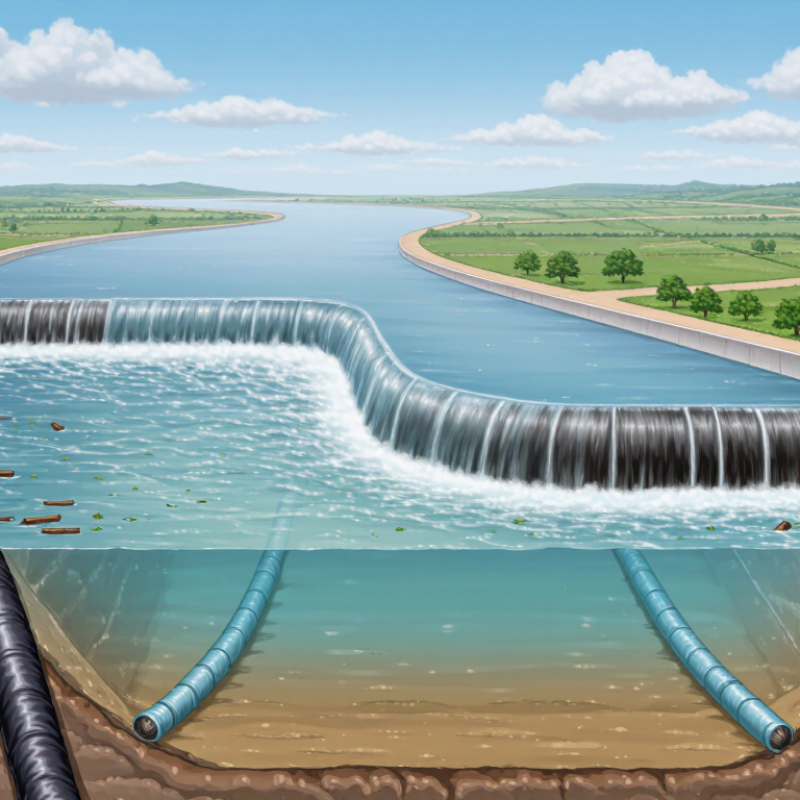
Choosing the best Rubber Dam For River Water Level Control in 2026 requires more than comparing prices. A rubber dam may appear simple, yet river conditions change quickly. Flow velocity, sediment, debris, temperature, and foundation quality affect its performance. A calm channel can become a harsh test overnight.
This guide considers practical hydraulic design, fabric strength, anchoring systems, inflation controls, and maintenance access. It also examines manufacturer experience, project references, testing records, and technical support. Reliable decisions should begin with surveyed river data, not attractive brochures. Engineers must check upstream flooding, downstream discharge, scour risks, and emergency deflation procedures. Small details matter. A blocked air pipe can delay a safe response.
No product is perfect. Available project data may be incomplete, and some performance claims deserve closer questioning. Site conditions can also defeat an otherwise strong design. Operators should inspect seams, valves, control cabinets, and nearby concrete after severe weather. A simple inspection log can reveal gradual leakage before it becomes expensive. Independent engineering review adds confidence, especially for public infrastructure and environmentally sensitive rivers. This comparison aims to separate durable solutions from short-term savings. It focuses on evidence, serviceability, and responsible water management. The final choice should match local hydrology, operating skills, budget, and long-term risk. That balance is easy to describe, but harder to achieve.
A rubber dam is a flexible, reinforced membrane installed across a river channel. It controls water levels by filling or releasing water or air inside the dam body. The principle is simple. When inflated, the dam rises and stores water upstream. When deflated, it lowers and allows water to pass through the channel.
For river water level control, engineers inspect flow speed, sediment load, channel width, and foundation strength before choosing a design. A reliable system needs strong anchors, smooth transitions, and a controlled filling system. At the riverbank, a control cabinet can adjust the dam gradually. Sudden changes may disturb nearby banks, aquatic habitats, or downstream users. Proper drainage and debris protection also reduce operating risks.
The best rubber dam in 2026 is not automatically the largest or tallest model. It must match local hydrology and daily operating needs. Field inspections should check membrane wear, anchor bolts, valves, and trapped gravel after storms. Small details matter. In practice, maintenance is sometimes underestimated, especially where branches and sharp sediment collect near the dam. That assumption deserves review. Engineers should also verify environmental requirements and emergency lowering procedures before installation. A practical design balances water storage, flood safety, service life, and manageable maintenance costs.
A rubber dam is an inflatable reinforced-rubber membrane installed across a river or channel. When filled with air or water, it raises the upstream water level; when deflated, it lowers the obstruction and helps pass higher flows. The chart shows nominal crest-height options commonly used in preliminary water-level-control planning. Final height selection depends on river flow, flood discharge, sediment movement, foundation conditions, and environmental requirements.
A rubber dam regulates river flow by changing its crest height. The flexible membrane is anchored to a concrete foundation across the channel. Operators fill it with air or water to raise the crest. This creates a controlled upstream pool for irrigation, habitat support, or water intake. When floodwater approaches, the membrane can be lowered quickly. The river then passes over the reduced crest with less resistance.
Flow control must respond to real conditions. Level sensors measure upstream water depth, while downstream gauges reveal sudden changes. An automated control system can adjust inflation pressure within minutes.
Manual inspection remains important. Silt, branches, sharp stones, and ice can damage exposed surfaces. Small leaks may seem harmless, but they can reduce the dam’s working height.
Field crews should record pressure, water levels, anchor conditions, and membrane wear after major storms.
A suitable rubber dam depends on river width, sediment load, flood frequency, and required storage height. Hydraulic engineers should model normal flow and emergency release behavior before installation.
The membrane needs enough strength for repeated inflation cycles, but no design is maintenance-free. That is the part many project plans underestimate.
Poorly placed sensors can also produce misleading readings. A practical design includes safe access, backup controls, debris management, and scheduled inspections.
Seasonal operation should follow measured river behavior, not assumptions from one unusually wet or dry year.
Choosing the best rubber dam for 2026 projects starts with the river, not a catalogue. A hydraulic survey should record normal flow, flood peaks, sediment depth, ice risk, and foundation conditions. These details determine crest height, chamber layout, and anchoring loads. A dam that performs well on a calm channel may fail during sudden debris impact. Risk hides in details.
Material selection deserves equal attention. Reinforced rubber should resist ultraviolet exposure, ozone, abrasion, and repeated flexing. In warm climates, temperature cycling can weaken joints and coatings. In muddy rivers, grit may collect around folds and valve areas. Ask for tested tensile strength, seam performance, service temperature, and inspection records. Do not accept vague durability claims. Field engineers should also check whether replacement sections can be handled safely with available equipment. This practical detail is often missed.
Control equipment affects both water level accuracy and response time. Sensors need protection from silt, floating branches, and electrical faults. Manual backup controls remain valuable during storms or power loss. A maintenance plan should define pressure checks, leak testing, anchor inspections, and seasonal shutdown procedures. Local hydraulic requirements and environmental permits must be verified before construction. Calculations are essential, but they are not perfect. Real rivers change, and monitoring should continue after installation. Small flaws matter. A careful operator records pressure changes before they become expensive repairs.
For a 2026 river water-level control project, the best rubber dam is not simply the largest or cheapest option. Installation quality determines service life. The foundation must be level, clean, and strong enough for repeated pressure cycles. Engineers should verify concrete strength, anchor spacing, seepage paths, and downstream scour protection before delivery. The U.S. Bureau of Reclamation’s Design Standards stress that hydraulic structures need site-specific loading checks, including floods, debris, sediment, and uplift.
Operation should follow measured river conditions, not visual judgment alone. The World Meteorological Organization’s State of Global Water Resources 2023 reported abnormal conditions in more than half of the world’s river basins. That variability makes automatic level sensors, pressure alarms, and emergency deflation valuable. Operators should record inflation pressure, upstream level, downstream level, weather, and unusual vibration. Keep it simple. A clear log can reveal slow leakage before major damage appears.
Maintenance needs discipline. Inspect the membrane for cuts, abrasion, ultraviolet damage, and hardening during every scheduled shutdown. Check valves, compressors, pipes, anchors, drainage channels, and control cabinets. Remove sharp stones and trapped debris near the dam edges. Sediment can hide defects. Annual testing is useful, but it may be insufficient after floods, freezing weather, or long storage. One practical weakness is often overlooked: staff may test sensors but never test the full emergency-deflation sequence. That gap deserves correction. Reliability comes from repeated field checks, documented repairs, and conservative operation.
2026 Best Rubber Dam for River Water Level Control?
Choosing a rubber dam for river control should begin with the river, not the product brochure. Flow speed, seasonal floods, sediment, sunlight, and bed conditions all affect performance. During site inspections, I would check anchor lines, abrasion points, and nearby habitats before comparing prices. A dam that works in a calm channel may fail beside sharp gravel. Small details matter.
Environmental protection needs practical controls. Keep water levels stable enough to reduce sudden stress on fish and wetland plants. Use gradual inflation and deflation. Monitor turbidity upstream and downstream. Provide a clear fish passage where the river ecology requires it. Rubber materials should resist ultraviolet exposure and temperature changes, while damaged sections must be repairable without contaminating the water. This part is often underestimated.
Safety planning should cover workers, the public, and emergency releases. Install visible warning signs, secure access points, and inspect the dam after heavy rain. Never rely on pressure readings alone. A blocked valve or unexpected debris load can create serious danger. Training records and inspection logs also support reliable operation.
Cost comparison should include installation, pumps, monitoring, repairs, storage, and removal. The cheapest quote can be expensive. A longer service life may justify a higher initial investment, but only with verified material data and maintenance support. I would still question optimistic lifespan estimates. River conditions are rarely polite. The best choice balances environmental risk, safe handling, and predictable lifetime cost.
| Evaluation Dimension | Typical 2026 Planning Data | Environmental Considerations | Safety and Operational Considerations | Cost Considerations |
|---|---|---|---|---|
| Dam Type | Inflatable fabric-reinforced rubber dam with a fixed foundation and automated or manual control system. | A flexible crest can be lowered during high flows, helping maintain a more natural flood-release pathway than a permanent rigid barrier. | The structure should include fail-safe deflation, upstream and downstream access controls, warning signs, and an emergency operating procedure. | Usually lower civil-works volume than a comparable fixed-gate structure, but the control system and foundation remain significant cost items. |
| Typical Crest Height | Approximately 0.5–5 m for many river-level-control applications; the final height depends on river hydraulics, foundation conditions, and permitted upstream level. | Lower crests generally reduce inundation area, upstream habitat alteration, and sediment trapping compared with taller permanent barriers. | The design must address overtopping, uplift, scour, debris impact, and changes in downstream flow velocity. | Higher crest height typically increases foundation, anchorage, hydraulic-control, and permitting requirements. |
| Operating Water-Level Accuracy | A properly instrumented system can target a stable operating level, but actual accuracy depends on sensor placement, flow variation, response time, and control logic. | Stable levels can support water-supply, wetland, and habitat objectives, but excessive stabilization may alter natural seasonal flow patterns. | Use redundant level sensing, high-level alarms, manual override, and a documented calibration schedule. | Automation increases initial cost but can reduce staffing, avoid unnecessary pumping, and improve response during changing flows. |
| Flood and High-Flow Response | The dam should be capable of controlled or automatic deflation before design flood conditions, subject to site-specific hydrologic and hydraulic analysis. | Lowering the crest can reduce upstream flood obstruction and help pass sediment and debris, although it does not eliminate flood risk. | Emergency deflation must not depend on a single power source. Provide backup power, manual release capability, and clear evacuation procedures. | Flood forecasting, backup power, telemetry, and emergency testing add cost but are important for risk reduction. |
| Fish Passage and Aquatic Connectivity | A rubber dam is not automatically fish-friendly. Passage performance depends on dam height, flow velocity, downstream water depth, and the need for a separate fish-passage route. | A dedicated fishway, bypass channel, or seasonal deflation plan may be necessary to maintain migration and ecological connectivity. | Hydraulic conditions should be checked for target species and life stages rather than assessed only by visual water flow. | Fishways and ecological monitoring can materially increase capital and operating budgets. |
| Sediment and Debris Management | Sediment accumulation, floating debris, ice, and sharp objects must be assessed during design and monitored during operation. | Periodic lowering can improve sediment continuity, but disturbance may temporarily increase turbidity and mobilize contaminated deposits. | Provide debris booms or deflectors where appropriate, safe inspection access, and procedures for removing material without exposing workers to moving water. | Debris racks, sediment removal, inspections, and repair work create recurring maintenance costs. |
| Membrane Material | Common membrane constructions use reinforced elastomers such as EPDM or chloroprene rubber, selected for water, weather, abrasion, temperature, and chemical exposure. | Material selection should consider leaching, end-of-life handling, repairability, and whether the membrane can be recycled or responsibly disposed of. | Specify resistance to abrasion, ultraviolet exposure, ozone, hydrocarbon contamination, and expected temperature conditions. | Higher-grade reinforcement and protective layers cost more initially but may reduce puncture and replacement risk. |
| Expected Service Life | A commonly used planning assumption is about 20–30 years for the membrane system, subject to site exposure, inspection quality, loading, and maintenance. | Longer service life reduces material replacement frequency and associated construction impacts. | Service-life estimates should not replace condition inspections, pressure checks, leak testing, and periodic structural review. | The life-cycle budget should include membrane replacement, control-equipment renewal, corrosion protection, and civil-works repairs. |
| Foundation and Scour Protection | The foundation must resist sliding, uplift, seepage, piping, overturning effects, and local scour under normal and flood conditions. | Poorly controlled scour can damage habitat and downstream substrates; energy dissipation and erosion protection should be designed together. | Use site investigation, hydraulic modeling, seepage control, access for inspection, and erosion-monitoring points. | Foundation and scour works can represent a major portion of total project cost, especially on weak or permeable riverbeds. |
| Energy and Control System | Air-filled systems require compressors, valves, pressure monitoring, and controls. Water-filled systems require pumps, valves, storage, and level management. | Efficient controls can reduce energy use; water-filled systems require attention to leakage, water quality, and discharge arrangements. | Install pressure relief, non-return protection, alarm functions, cybersecurity controls for remote systems, and a local manual mode. | Automation and telemetry increase capital cost but can reduce routine labor and improve fault detection. |
| Maintenance Frequency | Visual inspections should be performed routinely, with more detailed inspections after floods, debris impact, abnormal pressure loss, or unusual vibration. | Preventive maintenance reduces the likelihood of emergency works that may disturb aquatic habitats and riverbanks. | Inspection teams need water-safety training, suitable personal protective equipment, lockout procedures, and controlled access to the structure. | Routine inspections are relatively low-cost compared with emergency membrane repair or unplanned river diversion. |
| Indicative Capital Cost | A broad early-stage planning allowance may range from approximately USD 1,500–6,000 per m² of dam face area, excluding unusual land, diversion, permitting, and major fish-passage costs. | Environmental assessment, mitigation, habitat restoration, sediment management, and monitoring should be budgeted separately. | Safety systems, flood-warning integration, access control, backup power, and emergency exercises should be included in the estimate. | Actual cost varies substantially with dam width, height, river diversion needs, foundation geology, labor rates, hydraulic complexity, and regulatory requirements. |
| Indicative Annual O&M Cost | A preliminary allowance of approximately 1–3% of installed capital cost per year is commonly used for budgeting, subject to site conditions and operating intensity. | Monitoring, water-quality sampling, fish-passage checks, and sediment surveys may be required by the environmental permit. | The budget should cover inspections, emergency drills, control-system testing, spare parts, minor repairs, and operator training. | The percentage is a planning assumption, not a quotation. Remote locations and severe debris or ice conditions may require a higher allowance. |
| Permitting and Compliance | Projects commonly require hydraulic, geotechnical, structural, environmental, flood-risk, water-quality, and navigation reviews, depending on jurisdiction. | Baseline studies may cover fish, macroinvertebrates, sediment, wetlands, water temperature, dissolved oxygen, and riparian habitat. | The operating manual should define normal levels, restricted conditions, flood procedures, inspection duties, and incident reporting. | Permitting duration and mitigation requirements can significantly affect schedule-related costs and financing assumptions. |

Content © 2025 Komatsu. All Rights Reserved