What Is the Best ASRS Racking for Global Buyers?
Choosing the best Asrs Racking system is not simply a price comparison. Global buyers must match storage technology with product dimensions, pallet weights, warehouse height, and order frequency. A system designed for dense European pallets may perform poorly with wider loads or different handling equipment. Small details matter.
In practical projects, the evaluation often begins with a site survey. Engineers check floor strength, ceiling clearance, temperature, fire protection, and seismic or wind conditions. They also review warehouse management system compatibility. A reliable supplier should provide load calculations, equipment specifications, safety documentation, and clear installation responsibilities. Factory testing and site acceptance testing can reveal problems before daily operations begin.
There is no universal “best” solution. Not even close.
Pallet flow, crane-based, shuttle, and mini-load configurations serve different operating goals. Buyers should compare storage density, retrieval speed, energy use, maintenance access, and future expansion. Supplier experience with similar industries is valuable, but references still need careful verification. Ask to see comparable installations, uptime records, and service response procedures. Quoted capacity can also be misleading when it excludes damaged pallets, safety clearances, or peak-season congestion.
A well-informed decision combines engineering evidence with operational experience. It should also leave room for honest doubt. Forecasts change, software integration takes longer, and operators may use equipment differently than expected. This guide examines the factors global buyers should consider when selecting ASRS Racking for safe, dependable, and scalable warehouse performance.
Define Capacity Needs: 1,000–1,500 kg Pallets and 1,200×800 mm Loads
What Is the Best ASRS Racking for Global Buyers?
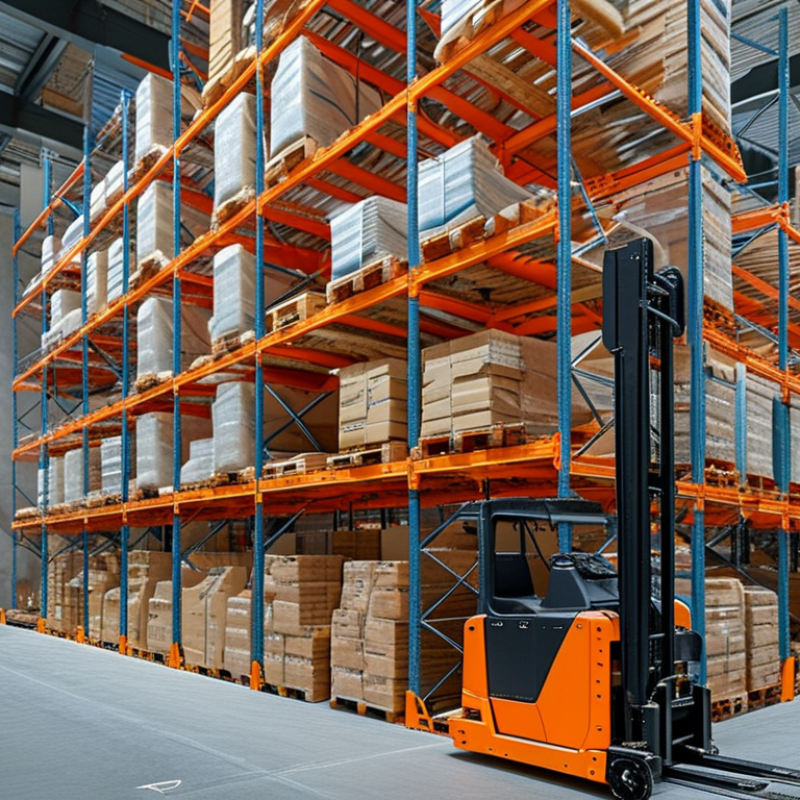
For 1,000–1,500 kg pallets, ASRS racking needs a clear safety margin. A 1,500 kg rating is not automatically enough. Stored goods, pallet quality, acceleration, and rack height all affect the real load. The 1,200×800 mm footprint also needs careful clearance. ISO 6780 identifies this pallet size as a common European standard. However, actual pallet overhang can vary between suppliers. That variation matters.
Interact Analysis reported that the warehouse automation market could reach about US$41 billion by 2027. This growth reflects stronger demand for accurate, space-efficient storage. For global buyers, deep-lane ASRS can improve density, but it may reduce access to individual pallets. A crane-based system usually supports precise location control. Engineers should verify beam deflection, seismic conditions, floor capacity, and retrieval speed before approving a layout. Small design assumptions can become expensive faults.
Tips: Request tested load tables, not only sales specifications. Confirm whether the rated capacity includes dynamic forces. Measure loaded pallets, including wrapping and damaged boards. Leave practical clearance around 1,200×800 mm loads. Independent inspection is wise. One overlooked detail remains common: the heaviest pallet is rarely the most stable one.
Benchmark Throughput: 100–600 Pallets per Hour Across ASRS Designs
For global buyers, ASRS throughput should be measured in real operating conditions, not brochure speed. A practical benchmark spans 100 to 600 pallets per hour across major designs. The lower range often suits crane-based systems with long travel distances. Shuttle systems can approach higher rates through parallel movements and multiple access points. Pallet conveyors, lifts, and software can still become bottlenecks.
Published warehouse automation research from Interact Analysis and MHI’s 2024 Annual Industry Report shows growing investment in automated storage and retrieval systems. However, these reports also emphasize integration, labor availability, and system scalability. A 600-pallet-per-hour target usually requires balanced receiving, storage, picking, and dispatch capacity. The number must include both inbound and outbound movements. Clarify that point.
For a 100-pallet operation, a single crane ASRS may provide simpler control and lower maintenance exposure. Around 300 pallets per hour, dual-crane or shuttle configurations deserve comparison. Near 600 pallets per hour, parallel aisles, buffer lanes, and redundant conveyors become more important. ASCM logistics guidance supports evaluating service levels, inventory accuracy, and recovery procedures alongside speed. In practice, I would test peak-hour demand with mixed pallet weights and awkward loads. Perfect pallets are unrealistic. A design that wins on paper may struggle during seasonal surges.
Evaluate Space Efficiency: 10–40 m Storage Heights and Aisle Widths
For global buyers, ASRS racking should be sized from product flow, not height alone. A 10 m system may outperform a 30 m tower when replenishment is frequent. Storage height affects crane travel, fire protection, building costs, and maintenance access. In project reviews, I measure usable clear height, floor flatness, load dimensions, and growth plans. Small errors matter. A 300 mm obstruction can remove an entire storage level.
Aisle width needs equal attention. Automated crane aisles can be narrow, often around 1.2–1.8 m, depending on load size and guidance accuracy. Forklift aisles may require 3–4 m or more. Shuttle layouts vary with pallet overhang, pallet quality, and transfer points. Do not copy a published figure. Test the widest load, damaged pallet, and emergency access route. The narrowest design is not always the most efficient.
Between 10 and 20 m, conventional buildings often offer simpler installation and easier service access. From 20 to 40 m, vertical capacity can improve land utilization, but wind, seismic design, rack stability, and temperature control become more demanding. Local engineering rules should be checked by qualified professionals. I would request simulations for throughput, queueing, and retrieval errors before approval. One weakness remains: forecasts are rarely accurate. Leave adjustable locations and spare capacity, even when the initial model looks perfect.
Verify Compliance: EN 15635, ISO 3691-5, Safety, and ROI Metrics
What Is the Best ASRS Racking for Global Buyers?
The best ASRS racking is not the densest design. It is the system that proves safe, maintainable, and financially measurable. EN 15635 requires disciplined use, damage reporting, load notices, and regular inspections for steel storage systems. An expert inspection should normally occur at least every 12 months. Photograph upright damage, record aisle clearance, and freeze unsafe locations immediately. Small failures become expensive quickly.
ISO 3691-5 must be applied carefully. It covers safety requirements for pedestrian-propelled industrial trucks, not every automated storage vehicle. If pedestrian trucks enter ASRS zones, verify separation, visibility, emergency stops, and traffic controls. Driverless vehicles may fall under ISO 3691-4 and additional regional machinery requirements. Do not accept a generic “ISO compliant” certificate. Ask for the exact standard scope, test evidence, risk assessment, and revision date.
Measure ROI before selecting rack height or shuttle density. Track storage positions, throughput per hour, retrieval accuracy, energy use, maintenance labor, downtime, and payback period. The MHI 2024 Annual Industry Report found that 55% of supply-chain professionals planned to increase technology investment. The International Federation of Robotics reported 541,302 industrial robot installations worldwide in 2023. Automation is expanding, but utilization still decides value. A half-empty high-bay system may look impressive and perform poorly. Our commissioning reviews often find optimistic demand forecasts. Recalculate with seasonal peaks, damaged pallets, software delays, and realistic labor costs. Safety remains non-negotiable. Efficiency is only useful when operators can trust the system.